If you’ve ever started a new job, stepped onto a worksite, or even climbed a ladder at work and wondered, “Do I need fall protection training for this?” — trust me, you’re not alone.
This is one of the most common questions workers and supervisors ask, and for good reason: fall protection rules can feel confusing, inconsistent, and packed with too much technical jargon.
So let’s break it down in plain English. No legal talk, no complicated citations — just simple answers.
The Simple Answer: Not Every Job Requires Fall Protection Training — But Many Do
Let’s start with this: fall protection training isn’t required for every job, but it is required for any job where a worker is exposed to a fall hazard.
In other words, OSHA doesn’t care about your job title — they care about your risk.
If you could fall and seriously hurt yourself, you need training.
If you’re never exposed to a fall hazard, then you don’t.
Pretty simple, right?
Read Related Article: Is Fall Protection Training an All-Day Thing? (Shorter or Longer?)
When Fall Protection Training is Required
This is the part most people are curious about. Here’s where training becomes mandatory.
| Job Type / Industry | Is Fall Protection Training Required? | Why / When It’s Needed |
|---|---|---|
| Construction Workers | Yes | Regularly exposed to open edges, scaffolds, roofs, and elevated work areas. One of the highest-risk groups for falls. |
| Roofers | Yes | Spend most of their time at height with limited edge protection; fall protection training is essential. |
| Warehouse & Distribution Workers | Sometimes | Required when using ladders, working on mezzanines, elevated platforms, or operating man-lifts. Not needed for purely ground-level work. |
| Manufacturing Employees | Sometimes | Needed if they access catwalks, platforms, pits, or other elevated areas as part of their job. |
| Oil & Gas / Industrial Workers | Yes | Frequently work at height on rigs, tanks, and platforms in very high-risk environments; training is mandatory. |
| Utility and Telecom Workers | Yes | Climb poles, towers, or elevated structures; fall protection training is critical for safe climbing and positioning. |
| Landscapers / Groundskeepers | Not Always | Only required if tasks involve working at height, such as tree trimming, roof cleaning, or ladder use above trigger heights. |
| Retail & Stockroom Workers | Sometimes | Training is needed when using rolling ladders or accessing high storage areas where falls are possible. |
| Office Workers | No | Typical office tasks do not involve fall hazards or elevated work, so fall protection training is not required. |
a. Working at Heights
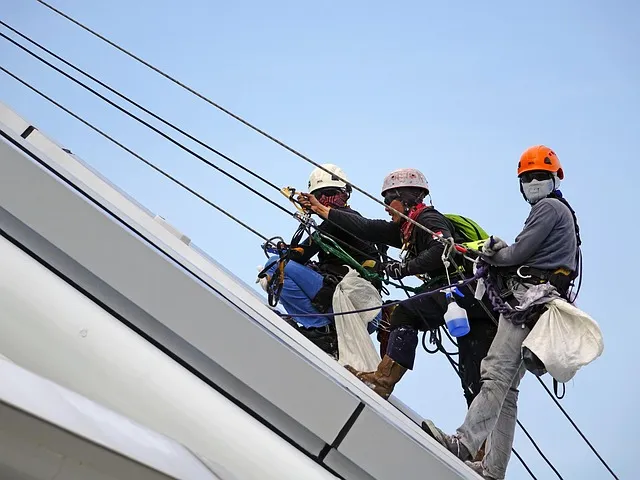
If your job takes you off the ground, even a little, you may need training.
- On ladders
- On roofs
- On scaffolds
- On elevated platforms
- On mezzanines
General Industry: Training is needed if you’re exposed to a fall of 4 feet or more.
Construction: Training kicks in at 6 feet or more.
If you’re thinking, “But what about short tasks?” — yep, even those count. OSHA doesn’t care if you’re up there for 2 minutes or 2 hours. A fall is a fall.
b. Using Fall Protection Equipment
If you wear or use any of these:
- Safety harness
- Lanyard
- Self-retracting lifeline (SRL)
- Anchors
- Guardrail systems
- Fall arrest or fall restraint systems
…then training is absolutely required.
It makes sense, right? You wouldn’t drive a car without learning how to use the brakes. The same goes for gear that’s literally designed to save your life.
c. Working Near Edges
You don’t have to be on the edge — you just need to be close enough to fall from it.
This includes:
- Loading docks
- Open edges on mezzanines
- Platforms without guardrails
- Skylights and open holes
- Roof edges
If there’s a chance you could slip or misstep, training is required.
d. Jobs With Constantly Changing Conditions
Some work environments change daily, or even hourly. This includes:
- Maintenance
- Construction
- Warehouse work with elevated storage
- HVAC installation
- Telecom work
- Tower climbing
- Electrical work
If you’re in an environment where hazards appear and disappear based on the task, you definitely fall under OSHA’s training requirements.
Read Related Article: Does OSHA Require Fall Protection Training Annually?
When Fall Protection Training Is Not Required
| Job Category | Is Training Required? | When Training Becomes Mandatory |
|---|---|---|
| Maintenance Workers | Sometimes | Required when tasks involve accessing elevated platforms, roofs, ladders, or overhead structures. |
| Freight / Logistics Staff | Sometimes | Needed if the job includes using ladders, loading docks with fall hazards, or elevated storage areas. |
| Retail & Stockroom Employees | Sometimes | Required when climbing step-ladders or accessing high shelving above OSHA trigger heights (4–6 ft). |
| Cleaning / Janitorial Workers | Sometimes | Training is needed when cleaning high windows, balconies, beams, or elevated building areas. |
| Landscaping & Grounds Crew | Sometimes | Training required when trimming trees, cleaning gutters, or performing tasks at height. |
Let’s clear this up, because a lot of people think OSHA wants every worker to complete fall protection training — they don’t.
You don’t need fall protection training if you:
Work Completely on the Ground
If you’re on level surfaces all day:
- Retail
- Office work
- Customer service
- Driving
- Kitchen work
- Warehouse floor operations
No fall hazards = no required training.
Work on Platforms Fully Protected by Guardrails
Guardrails count as a passive protection system. If the entire area is properly guarded, OSHA considers the site already safe. No extra training required.
Don’t Use Fall Protection Equipment
If your job never requires a harness, never involves ladders, and never takes you near an edge, then OSHA has nothing to say here.
What OSHA Actually Says
| Industry | Fall Hazard Level | Is Fall Protection Training Required? |
|---|---|---|
| Construction | High | Yes — Workers routinely face open edges, scaffolding, roofs, and elevated structures. |
| Warehousing & Distribution | Medium | Sometimes — Required for ladders, mezzanines, elevated racks, or lift equipment. |
| Manufacturing | Medium | Sometimes — Needed for catwalks, overhead platforms, pits, or machine access points. |
| Oil & Gas / Industrial Plants | Very High | Yes — Work environments involve elevated rigs, tanks, scaffolding, and high-risk operations. |
| Utilities / Telecom | Very High | Yes — Workers climb poles, towers, and elevated infrastructure daily. |
| Office Work | Low | No — Standard office tasks involve no fall hazards or elevated work. |
OSHA sometimes feels like a referee who loves rulebooks. But the basics are easy to understand.
Here’s what they require:
- If a worker is exposed to a fall hazard, training must be provided.
- Training must be understandable. (No fancy words that confuse people.)
- Employers must document the training.
- Employers must retrain when necessary.
- Training must be done by a “competent person.”
That’s it. Not so scary when you break it down.
Read Article: How Often Do You Need Fall Protection Training?
Employer Responsibilities (And Why It’s Not on Workers to Guess)
I hear this a lot:
“How should I know if I need training?”
You’re right — you shouldn’t have to figure it out.
Your employer is responsible for identifying hazards and training you before exposing you to them.
Employers must:
- Assess the jobsite
- Identify fall hazards
- Provide the right training
- Provide fall protection equipment
- Enforce the rules
- Retrain workers when needed
A worker should never be put in a situation where they have to guess whether they’re safe.
What Fall Protection Training Usually Covers
If you ever take fall protection training (and most workers will at some point), here’s what you can expect:
a. How to Recognize Fall Hazards
You’ll learn the common “danger zones” — skylights, ladders, roof edges, scaffolds, etc.
b. How to Use Fall Protection Equipment
You’ll actually handle gear, not just watch slides.
- How to put on a harness
- Adjusting it properly
- Connecting to an anchor point
- Choosing the right lanyard
- Using an SRL correctly
c. How to Inspect Equipment
Damaged gear is a silent danger. You’ll learn how to spot:
- Cut straps
- Bent hooks
- Rusted hardware
- Improper stitching
- Worn-out shock absorbers
d. What to Do If Something Goes Wrong
Emergency procedures matter. Workers learn:
- What to do after a fall
- How to call for help
- Basic rescue concepts
- How to avoid suspension trauma
This isn’t just compliance — it’s life-saving knowledge.
Read Related Article: Who Can Give Fall Protection Training? (And Who Cannot)
Why Training Is So Important — Even If Your Job Is “Low-Risk”
Even if OSHA doesn’t require it, training is still incredibly valuable.
Here’s why:
It Prevents Injuries
Most fall accidents happen because of small, avoidable mistakes — not because workers are careless, but because they didn’t know what to look for.
It Builds Confidence
Climbing a ladder or working on a platform feels different when you know you’re trained and prepared.
It Protects Everyone
Your safety decisions affect your coworkers, not just you.
d. It Reduces Fines and Violations
Employers who don’t train workers face expensive consequences.
It Makes You More Valuable
Training = skills = better job opportunities.
Real-World Scenarios (So You Can See the Difference Clearly)
Scenario 1: Warehouse Worker on a Mezzanine
If there are open edges or missing guardrails → training required.
If the mezzanine is fully guarded → training not required.
Scenario 2: Office Worker Using a Step Ladder
If the worker climbs above 4 feet or performs tasks that risk a fall → training is recommended, sometimes required.
If it’s a small step stool used safely → usually not required.
Scenario 3: Roofer on a Residential Job
Always required.
Height doesn’t matter — roof = fall hazard.
Scenario 4: Mechanic Changing a Light Bulb on a 10-Foot Ladder
Absolutely required.
Height + task + equipment = fall risk.
Scenario 5: Ground-Level Retail Stocker
No exposure to fall hazards → no training required.
Final Thoughts
Here’s the bottom line:
No — fall protection training is NOT required for every job.
But it is required for any job where you could fall and get hurt.
If your job involves heights, ladders, roofs, platforms, or fall protection equipment, you must be trained before doing the work.
And if you’re ever unsure, don’t guess. Ask. It’s your employer’s job to give you the right training and keep you safe.
Being informed is the first step. Being trained is the next.

Mike Pattenson is a construction safety trainer who loves helping workers stay safe on the job. He explains safety in a simple, practical way so crews can easily understand what to do — and why it matters.
Mike Pattenson is a construction safety trainer who loves helping workers stay safe on the job. He explains safety in a simple, practical way so crews can easily understand what to do — and why it matters.
View All Articles