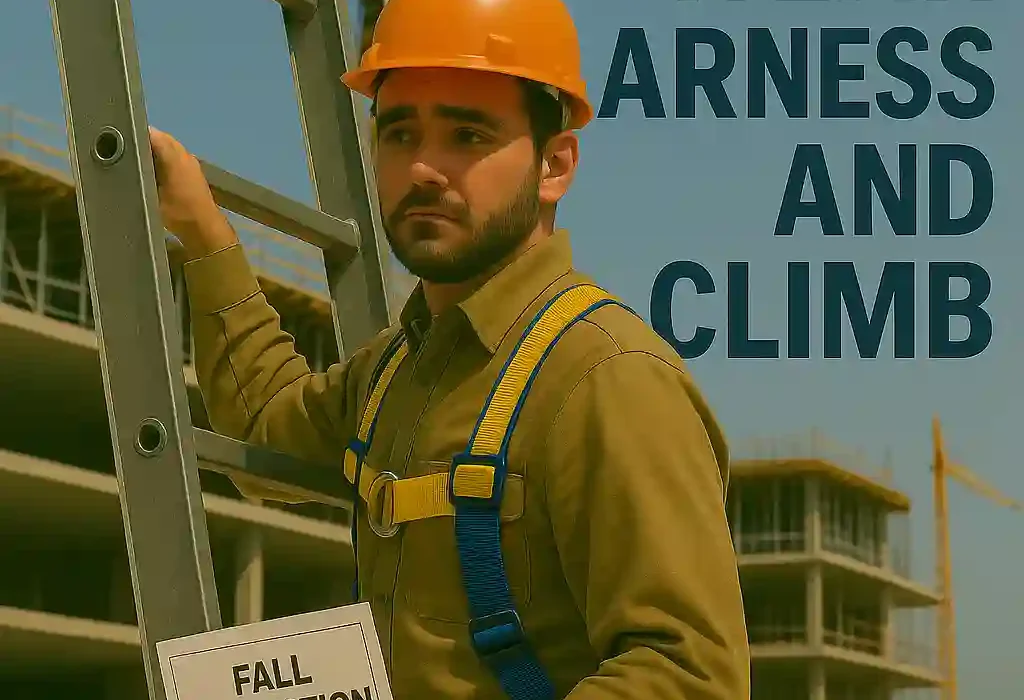
If you’re here because you’re wondering, “Are they gonna make me wear a harness AND climb something during fall protection training?” — don’t worry, you’re not alone. I can’t tell you how many times people walk into training with that exact thought running through their head.
Some even whisper it like they’re confessing a secret.
And honestly? It’s a fair question.
Nobody wants to show up to what they think is a simple training class only to find out they’re suddenly expected to climb a ladder or stand on some platform in front of everyone. So let me walk you through this in plain language, exactly the way I would explain it to someone on a job site.
Because the truth is this:
Yes, you’ll probably wear a harness.
No, you won’t always be required to climb.
It depends on the type of training, your job, and the training provider.
Let’s break this down together.
Why Wearing a Harness Is Almost Always Part of the Training
Look, you can’t learn fall protection from just looking at a picture or watching a video. You actually need to feel the harness on your body — how tight the leg straps should be, where the chest strap sits, how the D-ring lines up on your back.
That’s why almost every hands-on fall protection class starts with:
“Alright, everyone grab a harness.”
And if you’ve never worn one before, expect a bit of adjusting and awkward strap fumbling. Don’t worry, everyone goes through it.
Here’s what you’ll usually practice:
- Positioning the back D-ring (most people have it too low)
- Tightening leg straps just enough — not loose, not cutting off circulation
- Checking the chest strap height
- Making sure straps aren’t twisted
- Doing a buddy check with your classmates
I’ve seen guys put on a harness backwards. I’ve seen people clip the chest strap where the leg strap should go. I’ve also seen those lightbulb moments where someone finally says, “Ohhh, that’s what this strap is for.”
So yeah — wearing a harness is pretty standard. But don’t sweat it. Trainers help you adjust everything, and nobody expects you to get it perfect the first time.
When You Need to Wear a Harness vs. When You Don’t
| Scenario | Harness Required? | Notes |
|---|---|---|
| Hands-on fall protection training | Yes | Standard requirement across most providers |
| Awareness-only (classroom) training | No | No hands-on activities |
| Online fall protection course | No | Virtual knowledge only |
| Job requires climbing or elevated work | Yes | Must demonstrate harness use |
| Job is ground-level only | Sometimes | Depends on employer policy |
| Recertification training | Usually yes | Often includes practical review |
Now the Big Question: Do You Actually Have to Climb Something?
Here’s the honest, straight-from-experience answer:
Not always. Not even most of the time.
Whether climbing is required totally depends on:
- The type of fall protection class you’re taking
- Whether it’s awareness training or a hands-on practical course
- Your job role
- Your company’s training requirements
- The training provider’s style and setup
A lot of people think training will involve climbing some tall ladder, going onto a roof, or walking a beam. But that’s not how fall protection training usually works.
If you’re taking a general fall protection class — especially one not tied to a high-risk job — the hands-on portion may only involve wearing a harness and practicing tie-offs at ground level.
That’s right. Ground level.
In many classes, the “highest” thing you’ll step on is maybe a short 3-foot platform just to show you can tie off correctly.
So if the idea of climbing a ladder in front of a room full of strangers makes your hands sweat, breathe. You may not be climbing anything at all.
When Climbing Is Required vs. Not Required
| Training Type / Job Role | Climbing Required? | Typical Climbing Activity |
|---|---|---|
| Awareness-level training | No | None |
| Online training | No | None |
| General construction training | Sometimes | Low platform or short ladder |
| Roofing training | Yes | Short climb + tie-off demonstration |
| Steel erection / ironwork | Yes | Controlled ladder or platform climb |
| Warehouse / manufacturing | No | No climbing in job role |
| Telecom or tower climbing | Yes | Climbing with vertical lifeline or SRL |
Factors That Determine Whether Climbing Is Required
| Factor | Influence on Climbing Requirement |
|---|---|
| Job role | High influence — jobs with heights require climbing practice |
| Training provider | Some require climbing, others do not |
| Employer safety policy | May require hands-on evaluations |
| Certification level needed | Competent worker = climbing required; awareness-level = no climbing |
| Type of equipment used | SRLs and vertical lifelines often require climbing practice |
| Industry standards | Construction > more likely; general industry > less likely |
What Climbing Looks Like in Training (If It’s Included)
Now, for the classes that do include climbing, let me reassure you — trainers aren’t trying to scare you, test your bravery, or send you up a 20-foot ladder just to see what happens.
I’ve taught enough classes to know this: nobody wants an injury during training.
So what does the climbing part usually look like?
Typically something like this:
- A short extension ladder
- A 3- to 6-foot scaffold platform
- A low-height catwalk
- A small work platform designed just for training
These setups allow you to demonstrate:
- Three points of contact
- Proper tie-off techniques
- How to climb while connected to a vertical lifeline or SRL
- Safe movement while using fall protection equipment
Most workers say afterward, “Oh… that wasn’t bad at all.”
The climbing part is controlled, slow, and supervised. You’re tied off the entire time. No one is rushing you or pressuring you to “go higher.”
When Climbing Is Required (Usually Job-Related)
There are some jobs where fall protection training absolutely requires climbing — because climbing is part of your actual work.
If you’re in any of these fields, expect a bit of practical climbing:
- Roofing
- Telecom/tower work
- Steel erection or ironworking
- Scaffold erection/dismantling
- Construction framing
- Solar panel installation
- Wind turbine or energy sector elevated work
Your trainer will probably have you:
- Climb a ladder a few feet
- Tie off at different points
- Use a vertical lifeline
- Use a self-retracting lifeline (SRL)
- Demonstrate how to keep your lanyard tensioned while climbing
But again — this isn’t a “test of courage.”
It’s simply proof that you can safely move at height using the techniques you just learned.
When Climbing Is NOT Required at All
On the flip side, plenty of trainees never climb anything during fall protection training. Zero. Nada.
Here are common situations where climbing won’t happen:
- Awareness-level courses
- Online fall protection classes
- Warehouse workers with no elevated tasks
- Maintenance staff staying at ground level
- Manufacturing workers
- Office and facility workers
- General industry jobs
- Any job that doesn’t require climbing
If your job does not involve going up onto roofs, ladders, or platforms, your employer might not require practical climbing at all.
You’ll still wear the harness, but you won’t go up anything.
Walk-Through of the Hands-On Training Part
If you’ve never taken fall protection training before, let me paint the picture so you know exactly what to expect.
Step 1: Gear Issued or Checked
You get a harness — either your own or one provided by the trainer.
Step 2: Putting the Harness On
This is usually the funniest part. Everyone is adjusting straps, twisting them around, lifting harnesses over their heads wrong, or asking, “Where does this clip go again?”
Totally normal.
Step 3: Instructor Checks Everybody
The trainer walks around, helping adjust straps, checking fit, and making sure everyone is comfortable.
Step 4: Tie-Off Demonstration
You learn how to:
- Clip to an anchor
- Inspect your lanyard or SRL
- Keep slack to a minimum
- Understand fall clearance
Step 5: Optional Climbing (If Required)
If climbing is part of the class, you’ll do a simple, low-height climb under supervision.
Step 6: Practical Evaluation
Trainer checks that you performed the basics safely.
Step 7: Wrap-Up
You ask questions, return the gear, and you’re done.
No surprises. No tricks. No unsafe tests.
Can You Say “No” to Climbing?
In many cases — yes!
You can refuse to climb during the training if:
- You have a medical issue
- You have a physical limitation
- You’re taking awareness-level training
- Your job doesn’t require climbing
- You’re just renewing your certification
Most trainers won’t force anyone to climb if they’re clearly uncomfortable. The point is safety — not stress.
However, there’s one important catch:
If your actual job requires climbing at height, refusing to climb may limit the certification level you receive.
For example:
- You might pass awareness training
- But fail “competent climber” or “authorized climber” requirements
But if your job doesn’t involve heights?
Skipping the climb is usually completely fine.
Do Training Providers Tell You in Advance?
Good ones do.
Most reputable training providers clearly state:
- Whether climbing is part of the course
- Whether a harness will be required
- What type of hands-on evaluation you’ll do
If you’re unsure?
Just call and ask. Training centers deal with this question all the time.
Tips to Make the Climbing Part Easier (If You Do It)
If your class does involve a bit of climbing, here are a few friendly tips:
- Wear comfortable clothing
- Don’t overtighten your harness straps
- Ask the trainer to check your fit
- Keep your steps slow and steady
- Focus on your breathing
- Don’t look down if you’re nervous
- Remember: you’re tied off the whole time
And trust me, I’ve trained people who were terrified of heights. By the end of the class, they were saying, “That wasn’t so bad.”
So Do You Need a Harness AND Climb? Here’s the Bottom Line
Let’s put it in simple terms:
Wearing a harness?
Almost always yes — especially for hands-on classes.
Climbing something?
Depends on:
- Your job
- Your training provider
- Whether your employer requires a practical evaluation
- The type of certification you need
Most people wear a harness during training.
Only some people climb.
Very few climb more than a few feet.
Nothing is extreme, risky, or meant to scare you.
Final Thoughts
Fall protection training isn’t about testing how brave you are.
It’s about giving you the tools and confidence to work safely — whether you’re 3 feet off the ground or 30.
If wearing a harness and climbing a little is part of your job, the training will help you get comfortable with it.
And if your job doesn’t involve heights, your training will be a lot simpler than you probably imagine.
Either way, you’ll walk out knowing more than when you walked in — and that’s the point.

Mike Pattenson is a construction safety trainer who loves helping workers stay safe on the job. He explains safety in a simple, practical way so crews can easily understand what to do — and why it matters.
Mike Pattenson is a construction safety trainer who loves helping workers stay safe on the job. He explains safety in a simple, practical way so crews can easily understand what to do — and why it matters.
View All Articles