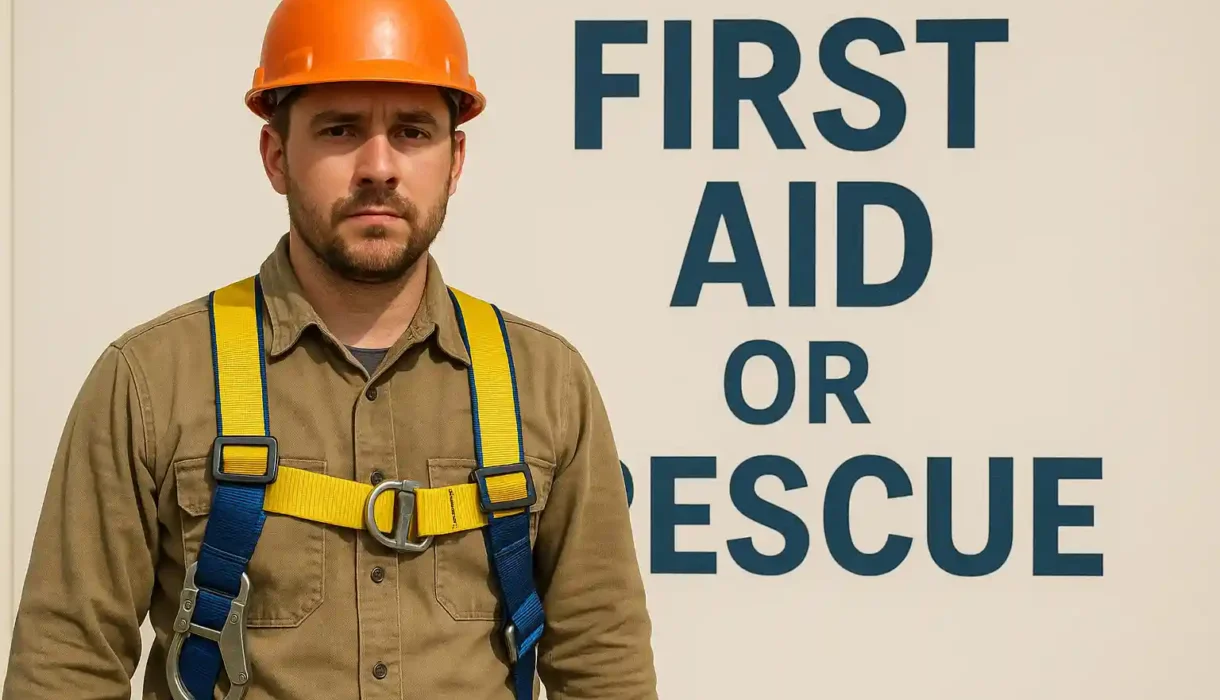
If you’ve ever signed up for fall protection training, or your boss told you that you “need to take the class,” you’ve probably wondered something that a lot of workers quietly ask:
“Does fall protection training include first aid or rescue?”
It’s a fair question. I mean, when someone falls, the story doesn’t end at the fall—there’s usually injuries, panic, and a whole lot of “what do we do now?” So shouldn’t first aid and rescue be part of the same package?
Well… yes and no.
And I’ll explain exactly how it works based on what I’ve seen over the years on job sites, training rooms, and during a few way-too-close-call situations.
Let’s break this down in a way that makes sense, without all the corporate-sounding jargon.
| Topic | Purpose | Who Usually Teaches It | Certification Issued? | Required by OSHA?* |
|---|---|---|---|---|
| Fall Protection | Prevent workers from falling or being injured in a fall | Safety trainers, fall protection instructors, safety consultants | Yes – Fall Protection or Competent Person certificate (provider-specific) | Yes – when workers are exposed to fall hazards |
| Rescue Training | Get a fallen/suspended worker down safely and quickly | Fall protection / rescue specialists, safety trainers | Sometimes – Rescue or Advanced Fall Protection certificate | Yes – OSHA requires a rescue plan and prompt rescue |
| First Aid / CPR | Treat injuries and keep worker alive until EMS arrives | First aid/CPR instructors (Red Cross, AHA, etc.) | Yes – First Aid/CPR certificate (from recognized body) | Yes – if medical help is not “reasonably accessible” |
Why People Think Fall Protection Should Include First Aid
Most people assume fall protection is basically the whole safety package: the harness, the anchor, the training, the inspection, the rescue—everything. Like it’s one big bundle.
But here’s what actually happens in real life:
A lot of fall protection training focuses on preventing the fall, not handling the aftermath.
And honestly, I get why workers ask this question. Because when someone does fall, the damage can be bad—broken bones, head injuries, internal bleeding, fractures, suspension trauma… it’s not pretty. And someone has to help them before the paramedics get there.
So, it makes total sense that workers want to know if first aid and rescue come with the training.
Let’s Start With the Basics: What Fall Protection Training Really Covers
A typical fall protection course (especially the basic one) usually focuses on making sure you don’t fall in the first place. That means you’re learning things like:
- How to recognize fall hazards
- How to choose the right equipment
- How to put on a harness properly (yes, people still mess this up)
- What a good anchor point looks like
- How to use lanyards, SRLs, and lifelines
- How to inspect your gear
- How to calculate fall clearance
- Safe work practices when working at heights
| OSHA Requirement | Covered in Fall Protection Training? | Notes / Explanation |
|---|---|---|
| “Prompt rescue” after a fall | Partially — usually discussed, sometimes hands-on | OSHA says employers must ensure prompt rescue; training varies by provider |
| Rescue plan required when using fall arrest | Yes — typically covered in Competent Person or advanced training | Basic User-level courses may only provide an overview |
| Workers must be trained on fall hazards | Yes — this is the main purpose of fall protection training | Required under OSHA 29 CFR 1926.503 and 1910.30 |
| First aid availability (if medical help isn’t nearby) | No — this requires separate First Aid/CPR training | OSHA requires first aid but not necessarily in the same course |
| Proper equipment selection & use | Yes — core content of all fall protection courses | Includes harness, anchor points, SRLs, lanyards |
| Suspension trauma awareness | Usually yes — included in most modern training programs | Often included in rescue-related modules |
| CPR/First Aid certification | No — NOT included in fall protection course | Must be taken separately unless bundled |
| Inspection of fall protection equipment | Yes — always covered | Daily pre-use inspection is required |
All good stuff, all important stuff. But notice something? None of that has anything to do with first aid.
So Does Fall Protection Training Include First Aid?
Short answer: No—not usually.
Most fall protection courses do NOT include first aid or CPR. They’re separate certifications.
And no, it’s not because trainers are trying to upsell you or anything like that. It’s simply because:
- First aid is a completely different topic
- It has its own training materials
- It requires a different type of certification
- Fall protection classes are already packed with a lot of content
If they squeezed first aid into it, the class would go from a half-day or full-day course to a two-day event. And honestly, most workers (and bosses) don’t want that.
But… some training centers do offer bundles, like:
- Fall Protection + First Aid
- Fall Protection + CPR
- Fall Protection + First Aid + Rescue
These are usually optional packages, not the default.
Okay, Then What About Rescue? Is That Included?
Here’s where things get interesting.
Rescue is usually included, at least in some form.
Especially if the course is for Competent Person training or advanced fall protection.
A lot of providers include rescue because OSHA expects employers to have a rescue plan.
You can’t just say:
“If someone falls, we’ll call 911.”
Nope. OSHA calls that not enough. They want “prompt rescue,” and anyone who’s been on a real job site knows that waiting for the fire department can take too long.
Here’s what rescue training usually covers:
- How to perform self-rescue
- How to lower a worker from their harness
- How to use a rescue kit
- How to avoid making the situation worse
- How to keep the worker from going into suspension trauma
- The steps of an assisted rescue
Now, does every fall protection course include hands-on rescue?
Not always.
Some only talk about rescue. Others give you rescue demos but don’t let you practice.
The best ones actually let you put on harnesses, ropes, pulleys, and rescue devices and teach you how to get a worker down safely.
Why Rescue Training Matters More Than Most People Realize
Let me tell you something a lot of workers don’t think about until it happens:
The danger doesn’t end when you stop falling.
If a worker is hanging in a harness:
- Blood circulation slows
- Pressure is put on arteries and veins
- Suspension trauma can kick in
- They can pass out
- They can suffer organ damage
And this can happen fast.
You don’t have 30 minutes.
You sometimes don’t even have 10.
I’ve seen workers get dizzy and disoriented just from hanging in a harness for practice. Imagine that after an actual fall.
That’s why rescue training is such a big deal.
You’re not just learning how to use gear—you’re learning how to save time, and time is what saves lives.
So Why Isn’t First Aid Part of the Training If Rescue Is?
Good question.
And here’s the simple answer:
Rescue is part of the fall protection system.
First aid is a separate life safety system.
They’re connected but not the same.
When someone falls, you need two things:
- Get them down – This is rescue.
- Take care of the injuries – This is first aid.
Fall protection training often teaches the first part, but not the second.
Also, OSHA doesn’t say that fall protection trainers must teach first aid.
But OSHA does say that workplaces must have people trained in first aid if medical services aren’t nearby.
When First Aid Should Be Part of Fall Protection Training
There are situations where having first aid and rescue together makes a lot of sense.
Here are some examples:
1. Remote Worksites
Places where ambulances take forever to arrive, like:
- Oil fields
- Logging sites
- Mining operations
- Off-site construction
- Wind turbine jobs
If something happens, you ARE the paramedic until the real ones arrive.
2. High-risk jobs
Industries like:
- Tower climbing
- Telecommunications
- Electrical utilities
- Industrial maintenance
These workers deal with serious hazards that can easily turn into injuries requiring immediate treatment.
3. In-house safety teams
Some companies want their workers to know both:
- How to perform a rescue
- How to perform basic first aid afterward
Especially companies who take safety seriously.
4. Confined space + fall protection combo work
A nasty mix of risks.
Most companies require both certifications for these jobs.
What OSHA Says About Rescue and First Aid
OSHA doesn’t say, “Your fall protection class must include first aid.”
But OSHA does say things like:
- You must have “prompt rescue” available when using fall arrest systems
- You cannot rely solely on calling EMS
- Employers must provide first aid if medical help isn’t close by
So in short:
- Rescue training = strongly expected
- First aid training = required for some jobs, but not necessarily included in fall protection
How to Know What’s Included in Your Training
If you really want to know whether your course covers first aid or rescue, don’t assume—just ask the provider:
Here are questions workers should ask:
- “Is rescue included? If yes, is it hands-on or just lecture?”
- “Does this training include first aid or CPR?”
- “Is the rescue practice realistic or just a demo?”
- “Do we learn how to use a rescue kit?”
- “Does OSHA require what you teach?”
- “Is this a User level or Competent Person level class?”
The last question matters because Competent Person training almost always includes rescue planning.
Cost Differences Between the Types of Training
Most workers want to know the price differences, so here’s the reality:
1. Basic Fall Protection (cheapest)
Usually 2–4 hours
No first aid
May include rescue overview but not hands-on practice
2. Fall Protection + Rescue (moderate price)
4–8 hours
Includes hands-on rescue practice
This is the most common “upgraded” version
3. Full Package (most expensive)
Fall Protection + Rescue + First Aid/CPR
Usually a full-day or two-day training
Great for remote or high-risk industries
In my experience, employers who care about safety will invest in the higher-level training.
But a lot of companies still go with the bare minimum, especially on smaller job sites.
My Final Thoughts: What You Actually Need to Be Safe
Look, here’s the truth from someone who’s seen more than enough close calls:
Fall protection training teaches you how to avoid disaster.
Rescue training teaches you how to save someone from disaster.
First aid training teaches you how to keep someone alive afterward.
They all fit together.
They all matter.
But they’re not always taught as a bundle.
If you work at heights—even occasionally—I’ll always recommend getting at least:
- Basic fall protection
- Hands-on rescue
- Basic first aid/CPR
Because when something goes wrong at heights, it goes wrong fast.
And the person hanging from that harness might be your coworker, your friend, or even you.
And the last thing anyone wants is to stand around panicking because nobody was trained in what happens after the fall.
Your harness protects you before the fall.
Your rescue plan protects you right after the fall.
Your first aid skills protect you while waiting for help.
Three different things… but all equally important.
Stay safe up there.

Mike Pattenson is a construction safety trainer who loves helping workers stay safe on the job. He explains safety in a simple, practical way so crews can easily understand what to do — and why it matters.
Mike Pattenson is a construction safety trainer who loves helping workers stay safe on the job. He explains safety in a simple, practical way so crews can easily understand what to do — and why it matters.
View All Articles