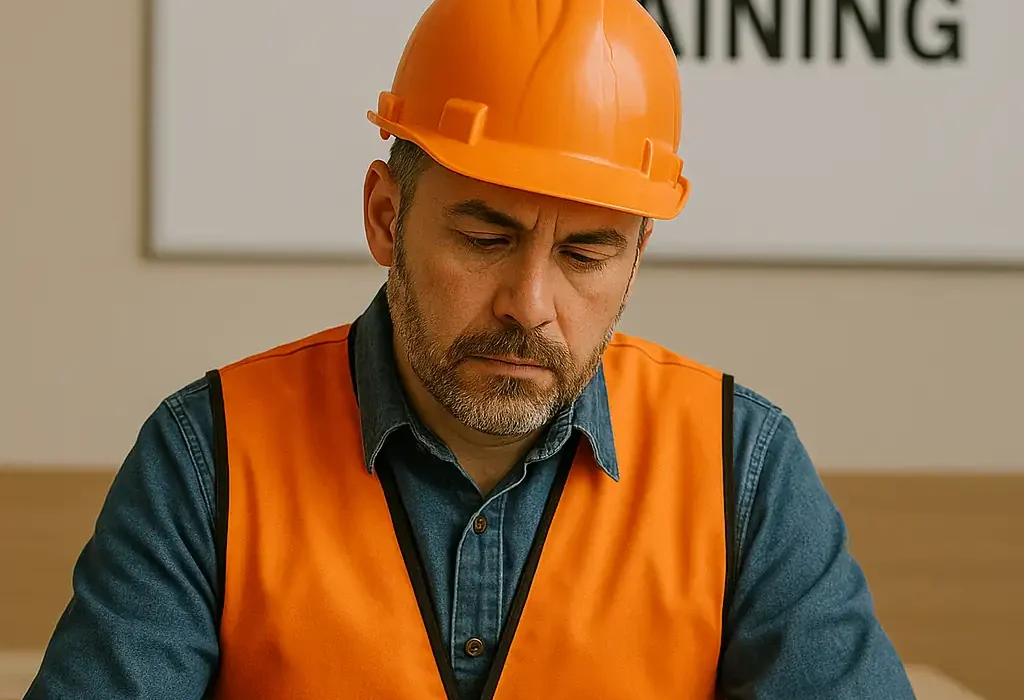
If you’ve been looking into fall protection training, you’ve probably noticed something confusing right away: some providers advertise a 1-hour course, while others say you need a half-day or even a full-day session.
And if you’re trying to plan your work schedule, crew rotation, or your own certification, that difference is a big deal.
Here’s the truth: there is no single correct number of hours.
Fall protection isn’t like a standard driver’s license where everyone takes the same exact test. The length of training depends on what you actually do on the job, what equipment you use, and how much hands-on practice is needed for you to work safely.
I’ve seen workers finish in one hour… and I’ve seen others take nearly eight. And both were completely valid. In this article, I’ll walk you through why the hours vary so much, what OSHA really requires, and what training length is right for you or your team.
Let’s clear the confusion once and for all.
Why Training Hours Can Vary From 1 to 8 Hours
Before we break down each training length, here’s the key thing everyone should understand: OSHA does not require a specific number of training hours. They simply require that workers are “trained and competent” in fall protection based on the hazards they face.
This means the training is flexible on purpose. A person who steps into a warehouse once a year doesn’t need the same level of depth as someone climbing structures every day.
Training hours increase depending on:
- How much equipment trainees need to use
- Whether hands-on practice is included
- The number of trainees in the room
- Site-specific hazards
- Whether testing/evaluations are required
- Whether rescue procedures are included
Think of it like driving a car: you can learn about driving in an hour… but learning to drive safely takes actual practice.
And fall protection works the same way.
Course Type vs. Training Hours
| Course Type | Typical Hours | Who It’s For | What It Covers |
|---|---|---|---|
| Awareness Training | 1–2 hours | Non-climbers, supervisors | Basic hazard recognition |
| Authorized Person Training | 3–4 hours | Workers using harnesses | Classroom + basic hands-on |
| Competent Person Training | 6–8 hours | Leads / foremen | Deep equipment + inspection knowledge |
| Rescue Training | 6–8+ hours | Rescue teams | Simulations, rescue tools, drills |
| Refresher Training | 1–3 hours | Previously trained workers | Update + hands-on review |
Read related article: Fall Protection Training Documentation: What You Need to Keep
Training Hours by Worker Type
| Worker Type | Typical Training Hours | What’s Included | Notes |
|---|---|---|---|
| Visitors / Office Staff | 1 hour | Hazard awareness only | No hands-on, no equipment use |
| Supervisors / Managers | 1–2 hours | Oversight responsibilities | Does not qualify them to tie off |
| Authorized Workers | 3–4 hours | Classroom + basic hands-on | Most common training duration |
| Daily At-Height Workers | 4–6 hours | Full hands-on + testing | Ideal for construction/roofing |
| High-Risk Workers (Tower, Telecom, Ironwork) | 6–8 hours | Detailed systems + rescue intro | Often required by company policy |
Online vs. In-Person Training
| Training Format | Total Hours | Hands-On Included? | Best For |
|---|---|---|---|
| Online-Only | 1–2 hours | ❌ No | Awareness-level roles |
| Blended Learning | 2–4 hours | ✅ Yes, partial | Authorized workers |
| Full In-Person | 4–8 hours | ✅ Yes, full practice | Workers using fall protection daily |
Read related article: Is OSHA 30 Fall Protection Training? (Why Many Get It Wrong)
The 1–2 Hour Courses: When a “Quick” Class Might Be Enough
Yes, there are legitimate situations where 1–2 hours of training makes sense. Usually, this applies when a worker needs awareness-level training, not full-on practical training.
Who is this good for?
- Project managers
- Supervisors who oversee work but don’t climb or tie off
- Office staff who occasionally enter job sites
- Visitors or auditors
- Workers near fall hazards but not using harnesses
What’s typically covered in a short class?
- Basic understanding of fall hazards
- General roles and responsibilities
- What constitutes a fall hazard
- What protective systems exist (harnesses, guardrails, nets, etc.)
- Why fall protection matters
- High-level review of regulations
What’s NOT covered?
- Harness fitting
- Equipment inspection
- Tie-off techniques
- Anchor point selection
- Practical rescue steps
- Fall arrest system use
A 1-hour course is like reading the instruction manual for a power tool. It’s useful for awareness, but it doesn’t mean you can operate the tool.
If you wear harnesses, climb ladders, use SRLs, or work at heights regularly, this short training will never be enough—nor will it meet OSHA’s “competent” or “qualified” expectations.
Read related article: What Does Fall Protection Training Consist Of
The Standard 3–4 Hour Courses: What Most Workers Need
This range is the most common for authorized workers—those who actually use fall protection equipment in their day-to-day tasks.
These courses hit the sweet spot between being thorough and being practical for scheduling.
What’s usually included?
1. Hazard Identification
Workers learn to recognize:
- unprotected edges
- roof openings
- ladder hazards
- leading edges
- platforms and scaffolds
2. Equipment Overview
Trainees get familiar with:
- harnesses
- lanyards
- self-retracting lifelines (SRLs)
- anchor points
3. Proper Harness Fitting
This alone can take time. Many workers don’t even realize how bad a loose or poorly adjusted harness is until it’s pointed out.
4. How to Tie Off Correctly
Workers learn:
- how to choose an anchor
- how to connect properly
- how to calculate fall clearance
- how to avoid swing falls
5. Equipment Inspection
A crucial part of the training—because worn-out equipment doesn’t save anyone.
6. Basic Rescue Awareness
Not full rescue training, but enough to understand:
- suspension trauma
- what happens during a fall
- why rescue plans matter
This type of course balances necessary theory and practical knowledge. Workers leave with enough confidence to use their equipment safely.
Read related article: When is Fall Protection Training Required? (7 Situations)
Full-Day (6–8 Hours) Training: When You Really Need the Full Experience
A full-day training isn’t for everyone, but when it’s required, it’s absolutely worth it. This level is ideal for:
- Construction workers doing daily at-height tasks
- Iron workers and roofers
- Telecom tower climbers
- Workers using complex or site-specific systems
- Teams needing rescue drills
- Companies with incident history or strict insurance requirements
| Training Component | Time Allocation | Details |
|---|---|---|
| Classroom Theory | 1–1.5 hours | Regulations, hazards, systems |
| Equipment Review | 30–45 minutes | Harness, lanyards, SRLs |
| Hands-On Harness Fitting | 45–60 minutes | Proper donning/doffing |
| Anchor Point Practice | 45–60 minutes | Restraint vs fall arrest |
| Equipment Inspection | 30–45 minutes | Webbing, stitching, hardware |
| Rescue Awareness | 45–60 minutes | Suspension trauma, rescue plan |
| Written + Practical Testing | 30–45 minutes | Exams and demonstrations |
Read related article: Fall Protection Training vs. Working at Heights: The Difference?
What takes so long?
| Factor | Impact on Hours | Why It Adds Time |
|---|---|---|
| Hands-On Harness Fitting | +30–60 minutes | Every worker must adjust and fit gear properly |
| Equipment Inspection Training | +20–40 minutes | Trainees learn to inspect stitching, hardware, labels |
| Number of Trainees | +5–10 minutes per trainee | More people = longer practice and testing |
| Jobsite Complexity | +1–2 hours | More hazards require deeper instruction |
| Rescue Awareness | +30–60 minutes | Rescue and suspension trauma training add significant time |
| Practical Exams | +20–45 minutes | Written + hands-on evaluation |
Read related article: How Much Does Fall Protection Training Cost?
1. Hands-On Practice
When everyone must:
- put on a harness
- adjust it properly
- tie off to anchors
- test lanyards
- inspect equipment
- simulate real scenarios
…things take time. And you want them to take time. Rushing hands-on fall protection defeats the purpose.
2. Practical Evaluations
Most full-day courses include:
- written exams
- practical demonstrations
- observation-based assessments
Evaluating each trainee adds minutes—sometimes hours—especially for larger classes.
3. Rescue Training
Rescue training is what truly extends the schedule.
This includes:
- lowering systems
- self-rescue awareness
- suspension trauma prevention
- demonstration of retrieval equipment
Even if full rescue drills aren’t performed, understanding rescue basics adds significant time.
4. Detailed System Breakdown
If your job uses:
- horizontal lifelines
- SRL systems
- overhead tracks
- engineered anchors
- confined space tie-off points
…you need extra time for each.
Full-day fall protection training is the gold standard for workers at high risk. It’s not just training—it’s a full safety intervention.
Read related article: Is Online Fall Protection Training Worth It? But Is It Effective?
Hands-On Practice: The Number One Reason Training Takes Longer
If there is one thing that separates a short class from a long one, it’s this: hands-on training.
Workers NEED time to physically adjust harnesses, check lanyards, and understand anchor selection. It’s one thing to talk about fall clearance—it’s another to see why it matters when standing near a simulated edge.
Here’s the reality: No matter how well someone understands the theory, they are not ready without practical experience.
Hands-on practice includes:
- Correct donning and doffing of harness
- Adjusting leg straps, chest straps, and D-rings
- Selecting proper anchor points
- Connecting and locking carabiners
- Inspecting harness stitching, webbing, and hardware
- Understanding fall arrest vs. restraint setups
Even in small groups, this takes time. In larger groups, this can easily double the training hours.
Testing: Why It Adds Up to 30–45 Minutes
Whether written or practical, testing adds both time and value.
Written tests measure:
- understanding of hazards
- knowledge of equipment
- regulation basics
Practical tests measure:
- proper harness wearing
- correct tie-off
- anchor point evaluation
- inspection skills
Companies often need documentation for:
- OSHA audits
- insurance compliance
- internal policies
- third-party approvals
So yes, the test matters—and it adds minutes to the clock.
What OSHA Actually Requires (and What They Don’t)
This is where many people get confused. OSHA does not say:
❌ “Fall protection training must be 2 hours.”
❌ “Workers must take an 8-hour class.”
❌ “Everyone must attend the same length training.”
Instead, OSHA says:
- Employers must ensure workers are trained and competent.
- Training must match the hazards present.
- Workers must understand equipment use, selection, and maintenance.
- Retraining must occur when:
- workplace changes
- equipment changes
- improper use is observed
- a worker is involved in a fall or near-miss
This flexibility is WHY training can range from 1 hour to a full day.
How to Choose the Right Training Length
Here’s the simplest guide based on real-world situations:
Choose 1–2 hours if:
- you don’t use the equipment
- you only need awareness training
- you’re a supervisor or office staff
- you’re visiting a job site
Choose 3–4 hours if:
- you wear a harness occasionally
- you tie off at straightforward locations
- you’re renewing your training
- you’re doing basic construction or maintenance work
Choose 6–8 hours if:
- you use complex systems
- you work at heights every day
- your job involves climbing
- you need rescue training
- your company requires full evaluation
- you have a history of near-misses or incidents
Common Misunderstandings About Fall Protection Training Hours
Here’s what I’ve seen again and again:
Misunderstanding #1: “Shorter is better.”
Not when your life depends on it.
Misunderstanding #2: “Everyone needs the same training.”
No. Different roles = different needs.
Misunderstanding #3: “Online training replaces hands-on.”
Not for authorized workers.
Misunderstanding #4: “My last job only required an hour.”
Different employers have different risk profiles and policies.
Misunderstanding #5: “Training is only about compliance.”
Training is also about practical, real-world safety.
Final Thoughts… Does Fall Protection Training Take 1 Hour or 1 Day?
The real answer: It depends entirely on the level of risk and the work you do.
If you’re only visiting a job site, 1–2 hours is plenty.
If you need hands-on practice, expect 3–4 hours.
If you’re doing real at-height work, a full day is the safest and most effective option.
What matters most isn’t how short the training is—it’s whether you walk away confident, capable, and truly prepared. Good training shouldn’t feel rushed. It should feel like something that gives you the skills to go home safely every day.

Mike Pattenson is a construction safety trainer who loves helping workers stay safe on the job. He explains safety in a simple, practical way so crews can easily understand what to do — and why it matters.
Mike Pattenson is a construction safety trainer who loves helping workers stay safe on the job. He explains safety in a simple, practical way so crews can easily understand what to do — and why it matters.
View All Articles