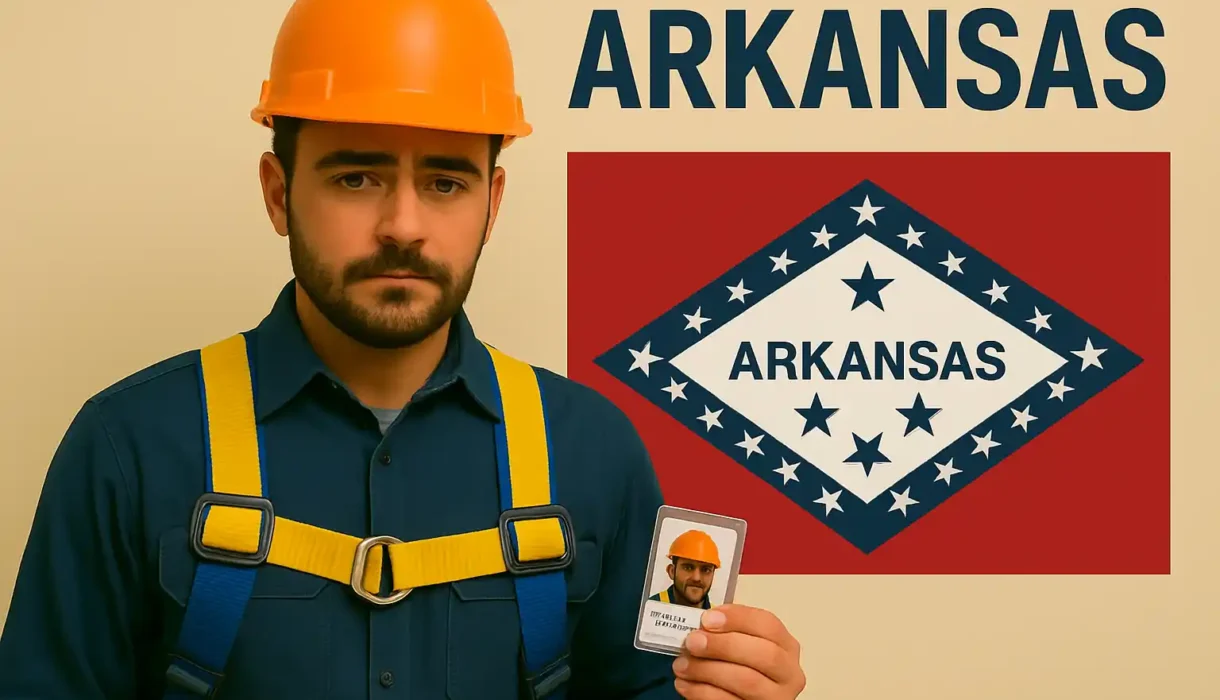
If you work construction, maintenance, roofing, oil and gas, warehousing, or anything that puts you on ladders or elevated platforms in Arkansas, you probably already know this: the rules around fall protection can get confusing real fast.
I’ve been in this industry long enough to see almost every kind of “fall protection mistake” you can imagine — people climbing with their harness unbuckled, anchor points tied to things that should never be anchor points, and workers who thought fall protection training was just a “one-time thing.” Trust me, I’ve seen more close calls than I’d like to admit.
Arkansas has a ton of industries where falls are a real risk:
- Roofing (big in both residential and commercial work)
- Construction and highway projects
- Poultry and food processing plants with elevated work platforms
- Warehouses and distribution centers (Amazon, Walmart, etc.)
- Energy and manufacturing facilities
Fall accidents happen everywhere, but in Arkansas, they’re one of the leading causes of serious injuries and job-site fatalities. I’ve seen workers with years of experience get hurt simply because they took a shortcut.
So yes, fall protection training isn’t just paperwork — it’s something that genuinely saves lives.
Is Fall Protection Training Required in Arkansas?
Short answer: Yes. Absolutely.
The rules in Arkansas follow federal OSHA standards because Arkansas does not have its own state OSHA plan. That means everything is based on OSHA 29 CFR 1926.501 (Construction) and 1910.28 (General Industry).
Here’s what OSHA — and therefore Arkansas — requires:
- If you work 6 feet or more above a lower level in construction, you need protection.
- If you work 4 feet or more above a lower level in general industry, you need protection.
- If you’re on a ladder, scaffold, roof, or platform where you could fall, you need training.
- If your equipment changes, job changes, or you mess up a procedure, you need retraining.
And who’s responsible?
Your employer.
But here’s the part most people don’t realize…
OSHA requires that fall protection training be done by someone who is “competent and qualified.” That means:
- Not just a coworker.
- Not just your project manager.
- Not just someone showing you YouTube videos.
You need real training from someone who knows the rules and can evaluate hazards.
What You Actually Learn During Fall Protection Training
A lot of folks show up thinking fall protection training is just about putting on a harness. Nope — that’s the easy part.
Here’s what I usually walk workers through during a class:
1. How to Recognize Hazards
You’d be surprised how many fall hazards people step over every day and don’t even notice. Roof edges, skylights, holes, unprotected sides — these can catch even experienced workers off guard.
2. How the Equipment Really Works
Harnesses, lanyards, SRLs, D-rings, anchor points. I show workers:
- How to put on a harness the right way (not twisted like a pretzel)
- How tight chest straps should be
- Why leg straps really matter (trust me, you want these correct)
- What anchors are actually rated for
A lot of injuries don’t happen because someone fell — they happen because someone was wearing the equipment wrong.
3. When to Use Fall Protection
People often assume fall protection is only needed for roofs, but here are other common Arkansas scenarios:
- Working on vertical ladders (12 feet or more)
- Walking on elevated platforms in factories
- Working in or around poultry plants
- Climbing fixed ladders
- Unloading trucks
- Installing HVAC units on rooftops
- Working on steel structures
- Performing maintenance on elevated machinery
4. What NOT to Do
Sometimes the best lessons come from “what not to do.”
I usually share stories (yes, including the embarrassing ones) about shortcuts I’ve seen. Most workers pay more attention when they hear real situations and not just rules.
5. Rescue Procedures
Everyone thinks “it won’t happen to me,” but if a worker falls and hangs in a harness too long, suspension trauma can set in fast.
Training covers:
- What to do immediately after a fall
- How to perform basic rescue
- Why you should never try a dangerous solo rescue
How Long Is Fall Protection Training?
Most first-time trainings take:
- 3–8 hours for basic training
- 1–2 hours for refresher training
- Full day if the employer requires hands-on practice
If you’re doing a blended online + in-person course, expect the online part to take 2–4 hours.
How Much Does Fall Protection Training Cost?
| Training Type | Typical Cost | Notes |
|---|---|---|
| Online Fall Protection Course | $45 – $95 | No hands-on practice |
| In-Person / Classroom | $150 – $250 | Best for first-timers |
| On-Site Group Training | $800 – $1,500 / group | Price depends on group size & travel |
| Hybrid (Online + Hands-on) | $100 – $180 | Accepted by most employers |
Here’s the general range I’ve seen across the state:.
Online courses are cheaper and convenient but keep in mind:
👉 OSHA usually expects hands-on demonstration
👉 Some employers won’t accept “online only” training
If you want the safest bet, go for in-person or a hybrid training.
What You Get After Completing Training
Most providers in Arkansas will give you:
- A certificate of completion
- A wallet-sized card
- Some also include a digital copy you can store on your phone
A lot of workers think the card never expires, but…
Does Fall Protection Training Expire?
Not officially — OSHA doesn’t set a fixed expiration.
BUT…
Most Arkansas employers require retraining:
- Every 2 years, OR
- After a fall incident, OR
- When using new equipment, OR
- When the worker shows unsafe behavior
So even if OSHA doesn’t specify an expiration date, your boss probably will.
Can You Use Your Arkansas Fall Protection Card in Other States?
Yes — since Arkansas follows federal OSHA, your card is valid anywhere in the U.S. that follows federal OSHA.
But whether your employer accepts your previous card depends on them. Some do. Many don’t.
A lot of employers want their own training because they know the hazards of their specific job site.
Who Provides Fall Protection Training in Arkansas?
Here are the most common types of training providers across the state:
- Safety training companies
- Equipment suppliers (some offer free training when you buy gear)
- Construction associations
- Local trade schools
- Independent safety consultants
- National training companies
- Online OSHA training platforms
If you want, I can also search up real companies in Arkansas with names, addresses, phone numbers, and websites — just say the word.
Training Providers in This State
| Provider / Company Name | Location / Address / Area Served | Contact Info / Notes | Website / More Info |
|---|---|---|---|
| Arkansas Safety & Health Training & Consulting | Based in Little Rock, AR (serves statewide) — offers OSHA-compliant safety training including fall protection | Phone / contact info listed on website | Website listing shows their services (search “Arkansas Safety & Health Training & Consulting”) |
| Safety & Health Academy – Arkansas branch | Provides nationwide OSHA & safety training including fall protection; serves Arkansas | Contact via their general web contact form or phone number | Check “Safety & Health Academy” website and choose Arkansas as state |
| Southern Safety Solutions | Serves clients in Arkansas and nearby states; offers fall protection & OSHA courses | Contact via phone / e-mail on their site | Southern Safety Solutions website |
How to Choose the Right Training Provider
Here’s my honest, experience-based advice:
1. Don’t choose based only on price
Cheap courses usually mean:
- No hands-on practice
- No real demonstration
- No instructor you can talk to
Training should protect your life — it’s worth paying for quality.
2. Look for real experience
A good instructor should be someone who has actually worked at heights before, not someone reading from a manual.
3. Ask for hands-on practice
If you’re new or unsure about the equipment, you’ll learn way more by actually wearing the gear.
4. Make sure the certificate is accepted by your employer
Some employers only accept certain providers.
Always ask first.
What Kinds of Businesses in Arkansas Need Fall Protection Training?
Based on my experience, these industries almost always require it:
- Roofing companies (biggest source of fall hazards)
- Electricians and HVAC installers
- General contractors
- Steel erection crews
- Window installers
- Warehouse workers on elevated platforms
- Solar installation crews
- Telecom tower workers
- Tree trimming companies
- Maintenance and repair workers
If your job involves climbing, lifting, or being anywhere near an edge — fall protection training is basically a must.
Can Your Employer Pay for the Training?
Yes — and they should.
OSHA requires employers to provide fall protection training at no cost to employees.
If your employer is telling you to pay for it out of pocket, remind them that OSHA doesn’t allow that.
What Happens If You Don’t Take the Required Training?
From experience, here’s what I’ve seen:
- Workers get disciplined or removed from the job site
- Companies receive OSHA citations (and fines)
- Insurance claims get messy
- Injuries happen that could have been prevented
I’m not trying to scare you — just speaking from real job-site experience. A lot of workers get hurt because they simply didn’t know what they were doing with the equipment.
Final Thoughts: Is Worth It?
Look — I know training isn’t the most exciting part of the job. Most people would rather get to work than sit through a safety class.
But I can tell you this with confidence:
The people who take fall protection seriously are the ones who go home safely every day.
Falls don’t care if you’re experienced. They don’t care if you’ve been roofing for 20 years. They don’t care if you think you can “just lean in for a second.”
Training isn’t just about the rules — it’s about giving you the skills to protect yourself when the unexpected happens.
Mike Pattenson is a construction safety trainer who loves helping workers stay safe on the job. He explains safety in a simple, practical way so crews can easily understand what to do — and why it matters.
Mike Pattenson is a construction safety trainer who loves helping workers stay safe on the job. He explains safety in a simple, practical way so crews can easily understand what to do — and why it matters.
View All Articles