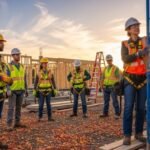
If you’ve spent even one day working on a Florida construction site, warehouse, solar installation, or roofing job, you already know this: Florida does not play nice with heights. The sun beats down on you, the humidity fogs your safety glasses, and that roof you’re standing on? It heats up like a frying pan by 10:00 a.m.
That’s exactly why fall protection training is such a big deal here. Not because OSHA said so (although they definitely did), but because one slip on a sweaty ladder rung or one gust of Florida wind can turn into a life-changing fall.
So if you’re wondering what fall protection training in Florida really looks like — the rules, the costs, how to get certified, and which providers are actually good — here’s the complete guide from someone who’s done this for years.
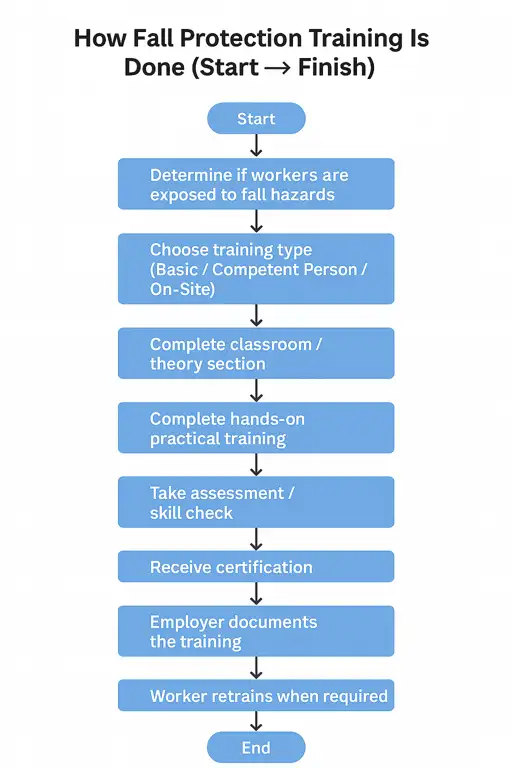
How Training Works
Fall protection training usually has two parts:
1. Classroom/Theory Portion
This covers:
- OSHA requirements
- Types of fall protection
- Common Florida jobsite hazards
- When fall protection is required
- How to inspect your gear
In Florida, instructors often include real examples and local case studies because the conditions here really do increase fall risks.
2. Hands-On Practical Portion
This is the part that actually saves lives.
You’ll:
- Try on a harness
- Adjust the straps correctly
- Practice connecting to approved anchor points
- Learn how SRLs work
- Identify hazards on a simulated jobsite
- See samples of worn or damaged gear
Most workers say this part is where things “click.”
Who Needs Fall Protection Training in Florida?
Here’s something that surprises a lot of workers:
OSHA does NOT care what your job title is — they care whether you can fall.
If your feet ever leave the ground, you might need training.
Construction workers (6 ft rule)
Anyone performing construction work at 6 feet or higher needs fall protection training. This includes roofers, solar installers, carpenters, ironworkers, and painters.
General industry workers (4 ft rule)
Warehouse and manufacturing workers must follow the 4-foot rule.
If you work on elevated platforms, mezzanines, racks, or anywhere above 4 feet — you need training even if you’ve never touched a roof in your life.
Anyone who wears a harness
If you put on a harness, even once a month, OSHA expects you to be trained.
Supervisors and foremen
If you’re responsible for watching workers, you need Competent Person-level understanding.
| Job / Trade | Typical Fall Hazard | Height Rule (OSHA) | Why Training Is Required |
|---|---|---|---|
| Roofers | Sloped roofs, edges, skylights | 6 ft (Construction) | Florida has high roofing activity; slips & tile breakage are common. |
| Solar Panel Installers | Residential roofs, pitched surfaces | 6 ft | The Florida solar boom puts workers on roofs daily. |
| Carpenters & Framers | Framing floors, roof trusses, ladders | 6 ft | Falls from framing levels are one of the top causes of injuries. |
| Ironworkers | Steel beams, columns, aerial lifts | 6 ft | Exposed leading edges + Florida winds make this extremely risky. |
| Construction Laborers | Edges, floor openings, scaffolds | 6 ft | General workers are often the ones exposed without realizing it. |
| Telecom & Tower Workers | High elevations, ladders, climbing | All elevations | Specialized fall systems required for tower climbing. |
| HVAC Technicians | Rooftop units, low edges, slippery tiles | 6 ft | HVAC units are often misused as anchor points—training prevents this. |
| Painters | Ladders, scaffolds, roof edges | 6 ft | Regular ladder use is one of the most overlooked fall hazards. |
| Warehouse Workers | Racks, mezzanines, platforms | 4 ft (General Industry) | Many Florida warehouses get cited for not following the 4-ft rule. |
| Electricians | Ladders, elevated work, roof access | 6 ft | Working near edges or openings while installing wiring. |
| Maintenance Technicians | Rooftops, elevated walkways, ladders | 4–6 ft | Dozens of different height hazards in typical daily work. |
| Window Installers | Scaffolds, ladders, ledges | 6 ft | Handling glass while balancing height makes this high-risk. |
| Anyone Using a Harness | Anchoring, connecting devices | Any height | If you wear a harness, OSHA expects full fall protection training. |
What’s Included in Fall Protection Training
| Training Component | Description | Why It Matters | Florida-Specific Hazards Addressed |
|---|---|---|---|
| Proper Harness Fitting | How to wear, adjust, and secure a full-body harness correctly. | Improper fit equals severe injury during a fall. | Loose straps due to heat & sweat; workers adjusting harnesses too loosely to stay cool. |
| Anchor Point Identification | How to choose approved anchor points and avoid unsafe ones. | Most fall fatalities happen from clipping into the wrong anchor. | Florida roof tiles, HVAC units, flimsy parapets often mistaken as anchors. |
| Lanyards & SRLs Usage | When to use each device, free fall limits, clearance requirements. | Wrong device = hitting the ground before it activates. | Wind gusts affecting movement, slippery surfaces increasing swing fall risk. |
| Fall Distance Calculations | Understanding deceleration distance, anchor height, and D-ring location. | Most workers underestimate how far they’ll actually fall. | Short Florida roofs and limited clearance make miscalculations more dangerous. |
| Ladder Safety | Proper ladder setup, angle, and three-point contact rules. | Falls from ladders are top OSHA citations in Florida. | Humidity causing slippery ladder rungs; rapid temperature changes weakening ladder materials. |
| Equipment Inspection | Checking for damage to webbing, stitching, D-rings, and connectors. | Damaged gear fails faster in Florida’s climate. | Salt air, sweat, humidity, and heat accelerate wear on fall gear. |
| Recognizing Fall Hazards | Identifying edges, holes, skylights, ladders, and unstable surfaces. | Awareness prevents most injuries before they happen. | Skylights on older Florida homes, slippery morning dew, wind shifts. |
| Rescue Planning | How to respond when a worker is suspended after a fall. | Suspension trauma becomes fatal if not handled fast. | Remote job locations and multi-story buildings affect rescue timing. |
| Florida Heat & Weather Risks | How heat exhaustion, sweat, and humidity affect fall risk. | Weather affects balance, grip, and gear integrity. | Daily thunderstorms, slippery roofs, sudden wind gusts. |
A good Florida fall protection course gives you both the knowledge and the hands-on experience you need to stay safe on the job.
Here’s what’s typically covered:
1. How to properly wear a full-body harness
This part is important. Most workers wear harnesses way too loose because it’s hot — and that’s extremely dangerous.
2. How to choose safe anchor points
Not everything that looks strong IS strong.
(In Florida, the #1 mistake is tying off to HVAC units — don’t do it!)
3. How to use lanyards and SRLs correctly
You’ll learn the difference between shock-absorbing lanyards, retractables, and when each one is appropriate.
4. Fall distance calculations
This tells you whether you’re going to hit the ground before the lanyard even activates. Most people get this wrong.
5. Ladder safety
Especially important in Florida where humidity makes ladder rungs slick.
6. Equipment inspection
Harnesses, lanyards, SRLs — everything needs regular checks.
Florida’s heat and sweat break gear down faster than most people think.
7. Hazard recognition
Things like:
- skylights
- floor holes
- leading edges
- unstable tiles
- ladder mispositioning
- wet or mossy roof surfaces
8. Rescue planning
If someone falls and is left hanging, suspension trauma becomes a medical emergency.
Good training explains how rescue should work.
Training Providers in Florida
| Provider | Address | Phone |
|---|---|---|
| Onsite Safety | 2464 W State Road 426, Suite 1022, Oviedo, FL 32765 | 866-950-8941 |
| Academy Training Center | 6820 E Adamo Dr, Tampa, FL 33619 | 813-678-2525 |
| Certified Slings & Supply | 310 W Melody Lane, Casselberry, FL 32707 | 407-831-7449 |
| Southeast Rigging, Inc. | 3001 Hansrob Rd, Orlando, FL 32804 | 407-521-8600 |
| Florida Safety Council – Occupational Safety Institute | 1505 E Colonial Dr, Orlando, FL 32803 | 407-897-4443 |
| Southwest Florida Safety Council | 1714 Evans Avenue, Fort Myers, FL 33901 | 239-332-3008 |
| Metro Florida Safety Council | 700 W Hillsboro Blvd, Bldg. 4, Suite 104, Deerfield Beach, FL 33441 | 954-603-1900 |
| UF TREEO Center (University of Florida) | 3900 SW 63rd Blvd, Gainesville, FL 32608 | 352-392-9570 |
How to Choose a Good Training Provider
Not all training providers are worth your time. Some pop-up “safety companies” offer cheap courses that don’t actually teach anything.
Here’s how to tell a good provider from a bad one:
✔️ Good Provider Signs
- Includes real hands-on practice
- Uses proper harnesses, SRLs, and anchors
- Offers bilingual (English/Spanish) instruction
- Trainer has experience, not just slides
- Certificate includes trainer info and company name
- Follows OSHA 1910 and 1926 standards
- Training lasts long enough to really understand the material
❌ Red Flags
- Online-only certification
- No hands-on session
- Extremely cheap prices
- Short 30-minute classes
- Certificates with missing info
If it feels like they’re rushing you through, they probably are.
How Much Does the Training Cost?
| Type of Training | Typical Cost Range | What’s Included | Who Should Take It | Certificate Validity |
|---|---|---|---|---|
| Basic Worker Fall Protection Training | $75 – $175 |
Classroom instruction Hands-on harness fitting Anchor point identification Lanyard/SRL use Basic rescue concepts |
Roofers, laborers, painters, HVAC techs, carpenters, solar installers, warehouse staff |
Typically 2 years |
| Competent Person Training | $250 – $500 |
Hazard identification Selecting proper equipment Supervision responsibilities Advanced fall calculations Rescue planning |
Supervisors, foremen, safety officers, experienced workers needing leadership roles |
2 years (sometimes employer requires annual refresher) |
| On-Site Corporate Training | $800 – $2,500 per group |
Custom training at your jobsite Site-specific hazard analysis Full hands-on session Group certification Spanish-language options available |
Companies with crews, contractors, roofing firms, construction teams |
2 years |
| Hybrid Training (Online + Practical) | $95 – $150 |
Online classroom/theory In-person hands-on practice Quizzes + final assessment OSHA-aligned course content |
Workers needing flexible scheduling, companies minimizing downtime |
2 years |
Online-only fall protection training is NOT valid — Florida employers should avoid those cheap $20 “certificate mills.”
How Long Is Fall Protection Training Valid in Florida?
Most fall protection certifications in Florida are valid for 2 years.
However, retraining is required if:
- You switch job roles
- You start using new equipment
- Your employer notices unsafe actions
- There’s an incident or near miss
- OSHA says so after an inspection
Some employers require yearly refreshers, especially on roofing crews.
Final Thoughts: Florida Is a Beautiful Place to Work — But Don’t Take Falls Lightly
If you’re working at heights in Florida, whether it’s on a rooftop in Orlando, a solar install in Tampa, a warehouse in Jacksonville, or a condo balcony in Miami, fall protection training is not optional.
I’ve seen workers learn one small thing in training that later saved them from taking a 10-foot drop onto concrete — no exaggeration.
Training is simple. Falling is not.
Get trained, stay trained, and work safe. Florida jobsites move fast, but no job is worth rushing into a fall.
Mike Pattenson is a construction safety trainer who loves helping workers stay safe on the job. He explains safety in a simple, practical way so crews can easily understand what to do — and why it matters.
Mike Pattenson is a construction safety trainer who loves helping workers stay safe on the job. He explains safety in a simple, practical way so crews can easily understand what to do — and why it matters.
View All Articles