
You’ve completed the training, passed the written test, survived the hands-on portion, and finally walked away with that fall protection certificate in your hand. It feels good, right? For many workers, that certificate feels like a permanent stamp of approval—something no one can ever take away. But here’s the reality most workers never hear during
If you’re preparing for fall protection training—or if your employer just told you that you have to take it—you might be wondering: Why is this required? And honestly, a lot of people ask the same thing. I’ve heard workers say things like: I get it. When you’ve been doing a job for so long, training
If you’ve ever worked on a construction site, refinery, warehouse, or even a basic maintenance crew, you’ve probably heard this question at least once: “Does OSHA actually check if we’re trained in fall protection?” Usually someone asks it right after a supervisor says, “Hey, tighten up—OSHA might stop by today.” And I get it. When
If you’re about to take fall protection training and wondering whether it involves math, trust me—you’re not alone. I’ve seen so many trainees walk into the classroom nervous about equations, formulas, and numbers. Some even joke, “I thought this was safety training, not a math class!” I get it. Not everyone is excited about doing
If you’re getting ready for fall protection training, there’s a good chance this question has crossed your mind: “What happens if I fail the test?” A lot of people won’t say it out loud, but almost everyone thinks it. And honestly, I understand why. The moment you hear “training test,” it brings back memories of
If you’re about to take fall protection training, I can guess what’s running through your mind: “Is this training hard?”“What if I don’t understand the technical stuff?”“Will the test be difficult?” Don’t worry—you’re not the only one asking those questions. Every single class I’ve ever sat in or helped with had at least one person
If you’re thinking about becoming a fall protection instructor, let me tell you this right away: it’s one of the most rewarding roles you can take on in the safety world. And I say that from experience. I remember being on job sites watching people climb ladders without checking their harness, hooking onto anchor points
If you’ve ever looked at a short platform, a low step, or a 3–4 ft drop and thought, “Come on… do I really need training for this?” — you’re not alone. This is one of the most common questions workers ask, especially those who are just starting in construction, warehouse work, maintenance, or manufacturing. And
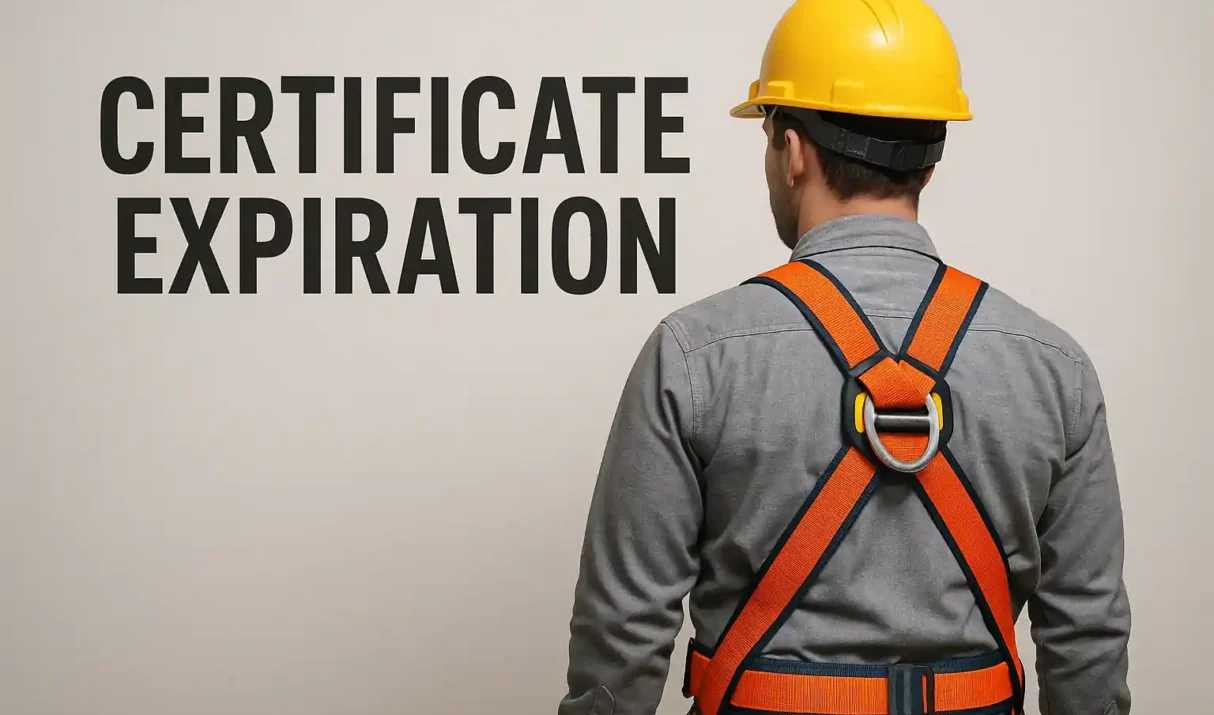
Most people don’t think about their fall protection training certificate until the day a supervisor asks for it—or worse, when an OSHA inspector shows up. And suddenly, the panic sets in: “Wait… does fall protection training expire? Do I need to retake it? Can I still work if it’s expired?” If you’ve ever found yourself