Here’s what mostpeople ask: What Does Fall Protection PPE Include?
Let’s be real for a second: A lot of people think fall protection PPE just means “put on a harness and you’re good.”
I can’t tell you how many times I’ve heard:
“Boss, I got my harness on!”
Then they turn around and they’re clipped into a piece of rebar that would snap faster than a cheap phone charger.
Or worse… there’s no lanyard. No anchor. No plan.
Just the harness—like it’s some kind of magic vest that stops gravity on command.
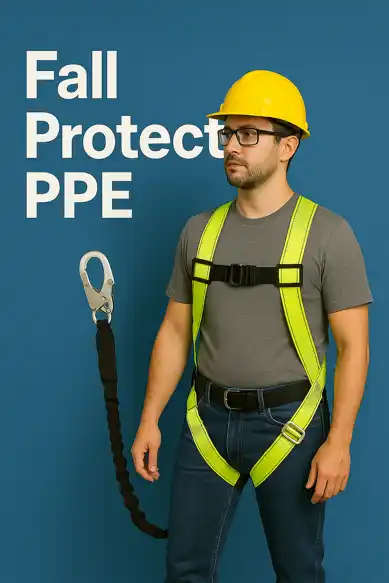
So let’s clear things up. Fall protection PPE is more than a harness. It’s a system, and every part has a job. And when one part is missing? That’s when things go from “I’m working” to “I’m falling” real quick.
Let me walk you through everything that counts as fall protection PPE—explained the way someone on a real jobsite would explain it, not a textbook.
| PPE Component | Primary Purpose | Example Situations | Notes |
|---|---|---|---|
| Full-Body Harness | Distributes fall forces across the body | Roof work, lift operation, tower climbing | Must fit properly; inspect before use |
| Shock-Absorbing Lanyard | Reduces fall force | General construction, elevated platforms | Requires clearance distance |
| Restraint Lanyard | Prevents reaching the fall hazard | Roof restraint line | Not for fall arrest |
| Self-Retracting Lifeline (SRL) | Locks quickly to stop a fall | Scissor lifts, boom lifts, catwalks | Good where clearance is limited |
| Anchor Point | Provides secure tie-off | Roof anchors, beam clamps | Must be engineered for fall arrest |
| Carabiners/Snap Hooks | Connect components | Connecting lanyard to harness | Locking mechanism must function |
| Positioning Device | Holds worker in place | Rebar work, ladder work | Not fall arrest unless combined with harness |
| Hard Hat | Protects head from impact | All elevated work | Chin strap recommended |
| Gloves | Improves grip | Ladders, railings, climbing | Reduces slips and drops |
| Safety Footwear | Prevents slips | Wet, oily, dusty surfaces | Non-slip soles preferred |
| Rescue Equipment | For post-fall recovery | Any fall arrest system | Required to avoid suspension trauma |
Required vs Optional PPE for Fall Protection
When you’re working at heights, not every piece of gear has the same level of importance—but some items are absolutely non-negotiable.
There’s the stuff you must wear because your life literally depends on it, and then there’s the gear that’s not technically required but makes the job a whole lot safer and a whole lot easier.
A lot of new workers get confused here, especially when they see different crews using different setups. So let’s break it down in plain language: what PPE is mandatory, what’s optional, and which “optional” items you really shouldn’t skip.
| PPE Item | Required for Fall Arrest | Required for Restraint | Required for Positioning | Optional |
|---|---|---|---|---|
| Full-Body Harness | ✔ | ✔ | ✔ (with belt) | ✘ |
| Shock-Absorbing Lanyard | ✔ | ✘ | ✘ | ✘ |
| Restraint Lanyard | ✘ | ✔ | ✘ | ✘ |
| SRL | ✔ | ✘ | ✘ | ✘ |
| Anchor Point | ✔ | ✔ | ✔ | ✘ |
| Helmet | ✔ (best practice) | ✔ | ✔ | ✘ |
| Gloves | ✘ | ✘ | ✘ | ✔ Recommended |
| Footwear | ✔ | ✔ | ✔ | ✘ |
| Rescue Equipment | ✔ | ✘ | ✘ | ✘ |
PPE That Is Fall Protection vs PPE That People Wrongly Assume Is
Not all safety gear counts as fall protection—and that’s where a lot of workers get confused. A harness, lanyard, and proper anchor point?
Yes, that’s fall protection. Hard hat, safety vest, steel-toe boots? Helpful, but they won’t stop a fall. Many workers show up thinking their general PPE is enough, only to find out it does nothing to keep them from hitting the ground.
Knowing the difference is key—not just for compliance, but for staying alive when you’re working at height.
| Actual Fall Protection PPE | Not Fall Protection PPE (Common Mistakes) |
|---|---|
| Harness | Safety vest |
| Lanyard (shock or restraint) | Tool lanyards |
| SRL | Regular belts |
| Anchor points | Clip-on badge holders |
| Connectors | Clothing straps |
| Positioning belts | Straps from bags/backpacks |
| Rescue devices | Non-rated ropes |
PPE You Need Before Working at Heights
Before you even step onto a ladder, platform, lift, or roof edge, there’s a short list of gear you absolutely need to have on you.
And no, it’s not just the harness. Working at heights is one of those things where the smallest mistake can turn into a big problem fast, so your PPE has to be complete, fitted, and ready before you leave the ground.
Think of this section as your quick “pre-flight check” — the essentials that make sure you go up safely and come back down the same way.
| PPE Item | Required? | Why It’s Needed | Quick Inspection Points |
|---|---|---|---|
| Full-Body Harness | ✔ Always | Keeps you upright, distributes force | Cuts, burns, corrosion, frays |
| Lanyard or SRL | ✔ Always | Stops the fall | Shock pack intact, connectors working |
| Anchor Point | ✔ Always | Holds system together | Rated anchor, no damage |
| Connectors | ✔ Always | Secure attachments | Locks properly, no rust |
| Positioning Device | Depends | Hands-free work | No cuts, working rope grab |
| Hard Hat | ✔ Always | Head protection during fall | Shell damage, chin strap |
| Gloves | Optional but recommended | Better grip | Tears, grip pads intact |
| Slip-Resistant Footwear | ✔ Always | Prevents slips | Sole wear, oil resistance |
| Rescue Plan/Device | ✔ Required for arrest systems | Post-fall survival | Accessible, workers trained |
Daily Inspection Requirements for Each PPE Component
Before you strap into any fall protection gear, there’s one habit you can’t skip: the daily inspection. Every harness, lanyard, anchor point, and connector has to be checked before you ever leave the ground. Why?
Because even small damage—like a frayed stitch, a cracked snap hook, or a stretched webbing—can turn a normal workday into a life-changing accident.
A quick, consistent inspection makes sure each piece of PPE is ready to do its job: protect you when it matters most.
| PPE Item | What to Check Daily | Why It Matters |
|---|---|---|
| Harness | Webbing, D-rings, stitching, buckles | Prevents failure during fall |
| Lanyard | Shock pack, webbing, connectors | Ensures fall force is controlled |
| SRL | Cable frays, lock-up function, housing | Must activate instantly |
| Anchor | Structure integrity, ratings | Keeps the entire system secure |
| Connectors | Gate action, rust, deformities | Failure point if damaged |
| Positioning Straps | Cuts, glazing, rope grab function | Worker stability |
| Helmet | Cracks, suspension, chin strap | Protects from impact |
| Gloves | Grip texture, holes | Prevents slips |
| Footwear | Tread wear | Avoids slipping |
| Rescue Gear | Accessibility, condition | Needed immediately after a fall |
Common Mistakes I Still See (Even From Experienced Workers)
Let me vent for a second, because these mistakes happen daily:
1. Not inspecting gear
People grab whatever’s on the rack and go.
2. Wearing a harness that doesn’t fit
If the leg straps are swinging like curtains, it’s not fitted.
3. Clipping to the wrong anchor point
Just because something is metal doesn’t mean it’s safe.
4. Destroyed or burnt lanyards
Welding and fall protection don’t mix unless the gear is rated for it.
5. Using fall restraint gear for fall arrest
A restraint lanyard will NOT absorb a fall.
6. “It’s only a quick job”
This sentence has sent more workers to the hospital than any technical failure.
Final Thoughts: Fall Protection PPE Isn’t Complicated Once You Understand It
At the end of the day, fall protection PPE is simple:
It’s anything that keeps you from hitting the ground—and anything that protects you if you do fall.
When you look at it that way, it becomes clearer:
- The harness keeps you upright
- The lanyard or SRL stops the fall
- The anchor holds everything together
- Connectors tie the system into one piece
- Rescue gear helps you afterward
- Head/hand/foot PPE help prevent secondary injury
Once you see fall protection PPE as a system, not random pieces of gear, it all makes sense.
And trust me—once you’ve seen what happens when people use the wrong gear (or none at all)… you’ll never skip your PPE again.
Mike Pattenson is a construction safety trainer who loves helping workers stay safe on the job. He explains safety in a simple, practical way so crews can easily understand what to do — and why it matters.
Mike Pattenson is a construction safety trainer who loves helping workers stay safe on the job. He explains safety in a simple, practical way so crews can easily understand what to do — and why it matters.
View All Articles