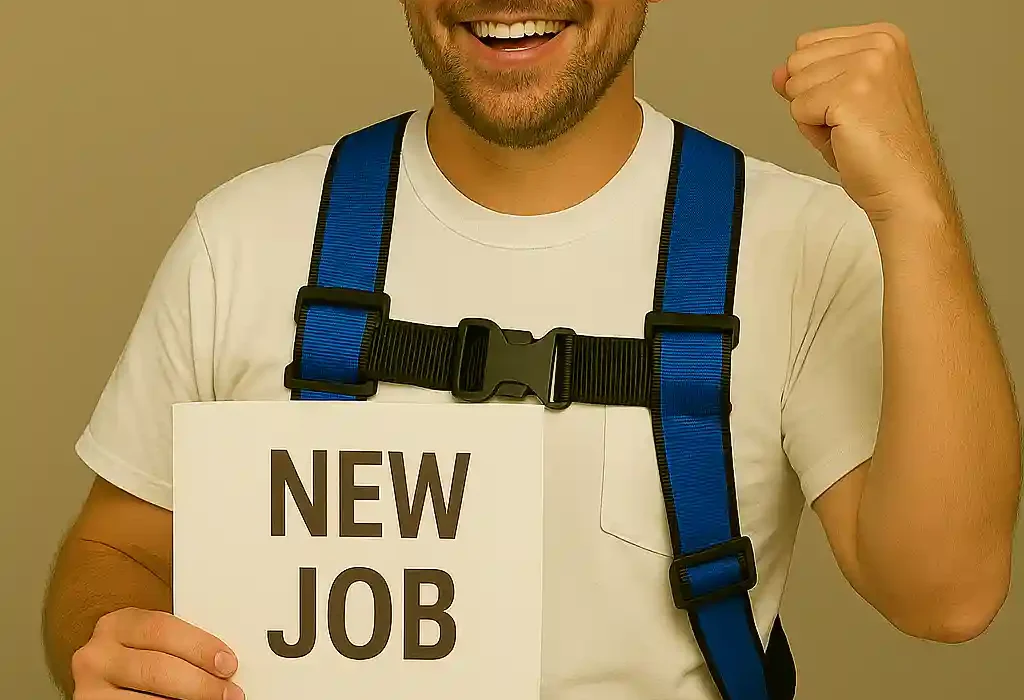
Yes — fall protection training can absolutely help you get a job. It doesn’t guarantee employment, but it gives you a real advantage over applicants who don’t have it. Employers in construction, roofing, warehousing, telecom, oil & gas, and maintenance prefer hiring workers who already understand the basics of working safely at heights.
Having this training shows three things employers care about:
- You’re job-ready.
- They don’t need to train you before sending you onto a site. You can start sooner, which saves the company time and money.
- You’re lower-risk.
- OSHA requires fall protection training. If you’re already trained, a company is less likely to face fines or safety issues when hiring you.
- You take safety seriously.
- This tells supervisors and safety managers that you’re responsible and won’t cut corners.
Many companies—even staffing agencies—prioritize applicants who already have safety certifications. In some industries, you won’t even be allowed onto the job site without this training.
So while fall protection training won’t magically guarantee a job, it definitely improves your chances, helps you stand out, and can get you hired faster—especially if you’re competing with applicants who don’t have it.
Jobs That Prefer or Require Fall Protection Certification
| Job Title | Certification Required? | Hiring Benefit |
|---|---|---|
| Construction Laborer | Often | High |
| Roofer | Yes, for most companies | Very High |
| Maintenance Technician | Sometimes | Medium |
| Warehouse Worker | Sometimes (if elevated work involved) | Medium |
| Tower Climber | Yes | Extremely High |
| Ironworker | Yes | Very High |
| HVAC Installer | Often | High |
| Solar Panel Installer | Often | High |
Industries That Commonly Require Fall Protection Training
| Industry | Why It’s Required | Hiring Advantage |
|---|---|---|
| Construction | Frequent work at heights | Very High |
| Roofing | Direct exposure to fall hazards | Very High |
| Warehousing | Elevated platforms, mezzanines | Medium |
| Oil & Gas | Rig work, ladders, elevated equipment | High |
| Telecom / Tower Work | Climbing towers | Very High |
| Manufacturing | Overhead work, maintenance | Medium |
| Wind Energy | Tall structures and towers | Very High |
| HVAC | Roof installations | High |
Why Fall Protection Training Actually Matters to Employers
| Employer Type | Why They Prefer Certified Workers | Retakes Needed? |
|---|---|---|
| Staffing agencies | Can place workers faster | Sometimes |
| Construction contractors | Saves time on onboarding | Maybe |
| Roofers | Immediate safety compliance | Yes |
| Industrial maintenance firms | Avoid OSHA fines | Yes |
| Subcontractors | Faster assignment to job tasks | Maybe |
Here’s the thing a lot of workers don’t realize: fall protection is one of the biggest safety requirements on almost every job site. Whether it’s construction, roofing, warehousing, maintenance, or telecom—heights are almost always involved.
And because falls are one of OSHA’s most frequently cited hazards, employers are extra strict about it. That’s why having fall protection training already completed gives you a big advantage.
Let me break down why:
1. Employers want workers who can start right away
Most companies prefer to hire people who are “job-ready.” Meaning:
- you understand the basics
- you know how to use a harness
- you won’t freeze when working at height
- you already learned the safety rules they expect you to follow
When you come in with a valid fall protection certificate, it saves them time. They don’t need to schedule your training. They don’t need to delay your start date. You can go on the site as soon as they need you.
2. You help them avoid OSHA fines
Let’s be honest—no company wants to pay OSHA penalties. If a worker doesn’t have proper fall protection training and gets caught working at height, the employer can get fined thousands of dollars.
So they naturally prefer hiring someone who already has training. You’re a lower-risk hire compared to someone with zero certifications.
3. It shows you’re responsible
Safety managers love hiring people who take safety seriously. If you came in with fall protection training before being hired, that tells them you’re someone who follows rules and doesn’t cut corners. And trust me—companies value that a lot more than you think.
What Jobs Actually Look for Fall Protection Training?
If you’re planning to work in any of these industries, having fall protection training can definitely boost your hiring chances:
1. Construction
- Roofers
- Carpenters
- Ironworkers
- Laborers
- Formwork teams
- Scaffold workers
Almost every construction job uses ladders, scaffolds, or elevated platforms.
2. Warehousing & Logistics
Even warehouse jobs often involve:
- order picking at height
- mezzanine platforms
- aerial lifts
- pallet racking
Many warehouses require at least basic fall protection awareness.
3. Telecom / Tower Climbing
These employers will always ask for fall protection training. They may still train you again, but having a certificate helps you get in faster.
4. Oil & Gas
Industrial plants and refineries have strict safety rules. A fall protection certificate is a major advantage in these settings.
5. Building Maintenance
HVAC techs, installers, and facility workers often work:
- on roofs
- near ledges
- on catwalks
Training is often required, even for low-level maintenance work.
Does This Training Guarantee You a Job?
Here’s the honest answer:
No certificate can guarantee a job.
But a fall protection certificate definitely helps you stand out—especially if two people are applying for the same role.
Think of it this way:
If two candidates apply:
- One has training, one doesn’t.
- The trained one can start immediately.
- The trained one seems safer.
- The trained one reduces company risk.
Who do you think the employer will pick?
In most cases, they’ll choose the person with the certificate.
| Situation | Reason | Hiring Impact |
|---|---|---|
| No practical experience | Companies may still require job skills | Medium |
| Certification expired | Considered invalid | Low |
| Employer requires their own training | Some companies retrain anyway | Medium |
| Wrong type of certification | Competent vs. authorized person differences | Low |
How Much Can Fall Protection Training Boost Your Hiring Chances?
From what I’ve seen on job sites, here’s what usually happens:
1. You get moved to the top of the applicant list
When a supervisor sees you already have fall protection training, you become a more attractive candidate. It’s one less thing for them to worry about.
2. Some companies only hire trained workers
Some contractors won’t even interview workers who don’t have basic safety certifications. It’s not because they’re being picky—it’s because they’re required to comply with safety rules before letting anyone step onto their job site.
3. You can negotiate better roles
Maybe not huge money at first, but companies may allow you to process into:
- lead roles
- specialized tasks
- more hours
- higher-paying positions
People with more safety training tend to move up quicker.
4. You stand out to staffing agencies
If you’re applying through a staffing company, they LOVE sending workers who already have training. It makes them look good to their clients.
What Employers Actually Check on Your Training Certificate
It’s not just “Do you have it?” Employers look at a few specific things:
1. The date
Certificates expire. Many companies want training that’s within 1–2 years.
2. The type of training
Some job sites want:
- Authorized Person Training
- Competent Person Training
- Hands-on practical training
If your certificate shows you completed the right type, you’re even more marketable.
3. The training provider
Certificates from reputable training companies carry more weight. Online-only certificates are accepted in some locations but not all.
4. Your full legal name
You’d be surprised how many employers reject a certificate just because the name doesn’t match the worker’s ID.
How to Make Your Certificate Work in Your Favor
A lot of people take the training but don’t fully use it during job applications. Here’s what you should do to maximize your advantage:
1. Put it on your resume the right way
Make a section called Certifications and list:
Fall Protection Training — Completed [Month, Year]
Authorized Person Level
It makes your resume look more professional.
2. Bring a printed copy to interviews
Supervisors appreciate someone who’s ready.
3. Highlight what you learned, not just the certificate
If asked, don’t say:
“I just took the training.”
Say something like:
“I learned how to inspect my harness, choose proper anchor points, and calculate fall clearance.”
This shows you actually understand the material.
4. Combine it with other short trainings
Even a few additional certificates can make you extremely hireable:
- Aerial Lift / MEWP
- Ladder Safety
- Lockout/Tagout
- Confined Space
- Forklift
- Scaffolding
These stack up and make you stand out even more.
Why Fall Protection Training Matters Even If You’re New to the Industry
If you’re switching careers or starting out with no experience, this training is one of the best ways to get noticed. I’ve seen plenty of new workers get hired just because they had safety training while others didn’t.
Employers prefer someone who’s trained over someone who’s experienced but untrained. Why? Because experience without safety is a liability.
A trained worker is:
- easier to supervise
- less likely to get injured
- more predictable
- more reliable
That’s exactly the kind of person companies want.
Real Talk: When Does Fall Protection Training Make the Biggest Difference?
From real-world experience, here are the situations where your certificate gives you a huge edge:
1. When applying for entry-level roles
Your certificate can compensate for lack of experience.
2. When applying during peak seasons
Contractors need workers fast, and trained workers get hired first.
3. When applying through agencies
They prioritize sending trained candidates to clients.
4. When switching industries
Your certificate proves you’re serious and safety-conscious.
So… Will Fall Protection Training Help You Get a Job? Absolutely.
Is it a golden ticket? No.
Is it one of the easiest ways to stand out? Yes.
Is it a smart move for anyone wanting to work in construction, roofing, warehousing, maintenance, telecom, or industrial settings? 100%.
If you want employers to notice you, trust you, and put you on the job faster, fall protection training is one of the best investments you can make.
It shows initiative.
It shows responsibility.
It shows you’re ready to work safely.
And in today’s job market, that’s exactly what employers want.
Mike Pattenson is a construction safety trainer who loves helping workers stay safe on the job. He explains safety in a simple, practical way so crews can easily understand what to do — and why it matters.
Mike Pattenson is a construction safety trainer who loves helping workers stay safe on the job. He explains safety in a simple, practical way so crews can easily understand what to do — and why it matters.
View All Articles