If you’re here, you’re probably asking the same question a lot of workers ask me: “Where should I take my fall protection training?”
And honestly—I get it. When I was new in the industry, choosing a training provider felt like picking a school all over again. There were online courses, hands-on classes, employer-provided training… and every place claimed to be “OSHA-approved.”
But after years of helping workers, safety officers, and supervisors choose (and sometimes switch!) their training, I’ve learned one thing:
Where you take your fall protection training matters just as much as the training itself.
So today, let me walk you through the best places to get fall protection training, based on real experience and what I’ve seen work for thousands of workers.
Why Choosing the Right Training Provider Matters
Fall protection isn’t just another safety requirement—it’s one of the most important ones.
Falls are still the #1 cause of worker deaths in construction, and every year I’ve seen accidents that could have been prevented with proper training.
When you pick the right training provider, you get:
- A certificate that employers actually accept
- Training that makes you confident using your harness
- Hands-on demos that make everything “click”
- Real understanding of anchor points, lanyards, SRLs, and rescue basics
Choosing the wrong provider? Well… I’ve had workers come to me saying:
“My new employer didn’t accept my training from the last place.”
That’s frustrating. You’re already trained, and suddenly you need to take it again.
So let’s make sure that doesn’t happen to you.
| Training Provider Type | Cost Range | Hands-On? | Certificate Provided? | Best For | Pros | Cons |
|---|---|---|---|---|---|---|
| Online Training | $20–$60 | No | Yes | Workers needing fast, flexible, affordable training | Convenient, self-paced, budget-friendly | No hands-on practice |
| Local Training Centers | $100–$300 | Yes | Yes | Workers needing hands-on experience | Instructor guidance, real equipment demos | Higher cost, travel required |
| Employer-Provided Training | Free | Depends | Often | New hires, current employees | Free, job-specific, convenient | Not always accepted by other employers |
| Equipment Manufacturers | Free–$200 | Yes | Often | Supervisors, inspectors, advanced learners | Technical, brand-specific, high-level insights | Limited availability |
| Community Colleges | $50–$150 | Often | Yes | Students and workers wanting structured training | Affordable, recognized, good foundation | Fixed schedule, not flexible |
| Union Training Centers | Free–$200 | Yes | Yes | Union members in skilled trades | High-quality standards, realistic jobsite training | Union members only |
Read Related Article: Does Fall Protection Training Count in Other Countries?
1. Online Training Providers — The Most Convenient Option
If you’re busy or you hate sitting in a classroom, this might be your best option.
One of the things I love about online training is that you can:
- Study at your own pace
- Learn from your phone or laptop
- Pause and continue anytime
- Save money because online courses are usually cheaper
Who is online fall protection training best for?
- Workers preparing for a job interview
- People switching industries
- Those who want something quick and straightforward
- Anyone who just needs theory-based training
What to look for in a good online provider:
- OSHA-aligned topics
- Clear videos and visuals
- A quiz or knowledge check
- Immediate certificate download
- Good customer reviews
Read Related Article: Does Fall Protection Training Transfer Between Jobs?
Employer Acceptance of Online Fall Protection Certificates
| Industry | Accept Online Fall Protection Training? | Notes |
|---|---|---|
| Warehousing & Logistics | Yes – in most cases | Many warehouses accept online theory as long as the employer does a quick on-the-job demo or orientation. |
| General Manufacturing | Yes – often accepted | Online training is commonly used for plant workers, with supervisors reinforcing site-specific rules. |
| Commercial Maintenance & Facilities | Usually accepted | Good for maintenance staff who only work at low to moderate heights, especially when combined with toolbox talks. |
| Construction (General) | Sometimes accepted | Some contractors accept online certificates, but many still prefer or require hands-on or classroom-based training. |
| Roofing & Steel Erection | Rarely accepted alone | High-risk work at height usually requires in-person, practical fall protection training plus site-specific instruction. |
| Telecom, Tower & Wind Turbine Work | No – online theory is not enough | These industries almost always require intensive hands-on training, rescue drills, and employer-approved programs. |
| Oil & Gas / Heavy Industry | Depends on employer | Some sites accept online training as a starting point, but many require additional in-person or site-specific training. |
| Small Contractors / Service Companies | Often accepted | Online training is popular here because it’s cheaper and faster, especially for small crews and subcontractors. |
I’ve taken a lot of these courses myself (both to check quality and to see what others are learning), and the good ones are surprisingly solid. They won’t replace hands-on practice, but they give you the foundation you need.
Read Related Article: Is Your Fall Protection Training Valid in Another State?
2. Local Training Centers — Best for Hands-On Learning
If you’re the type who learns better by doing, then local training centers are your best friend.
This is where I had some of my earliest and most memorable training sessions.
I remember my first instructor walking up to me, grabbing my harness, and saying:
“If you wear it like that, it won’t save you.”
That one sentence changed everything.
And that’s what hands-on training gives you—real feedback.
Local centers typically offer:
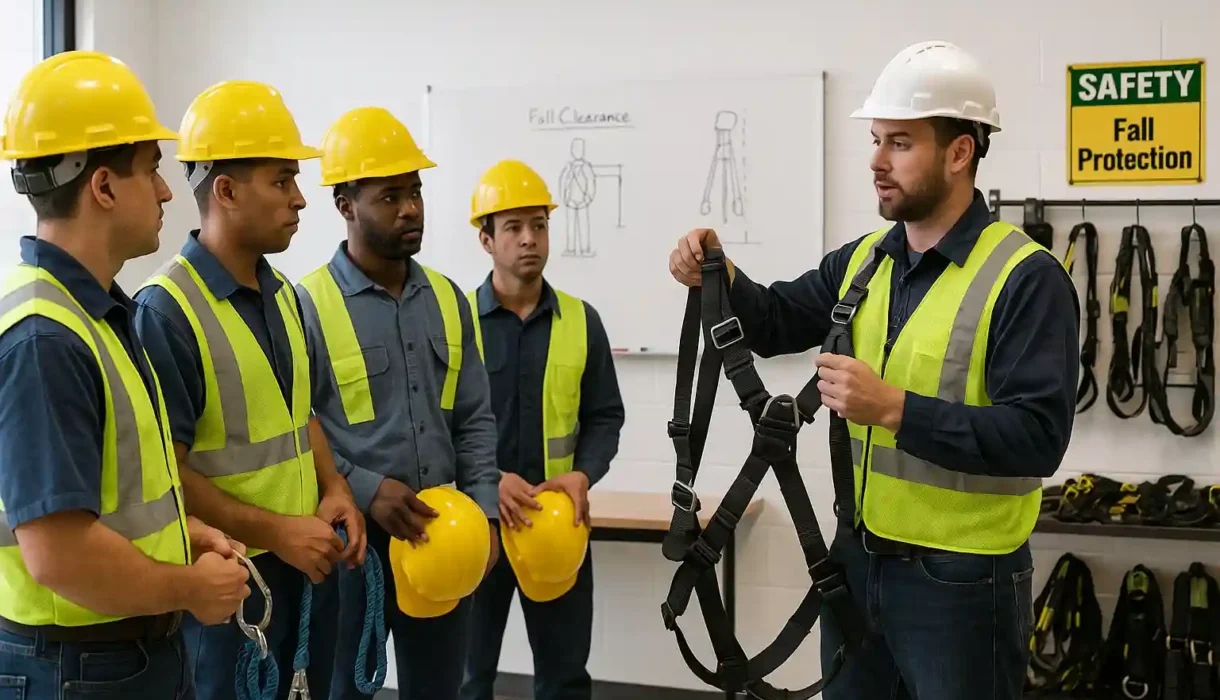
- Demonstrations of proper harness fitting
- Practice identifying anchor points
- Using lanyards, SRLs, and connectors
- Ladder safety and guardrail basics
- Real fall arrest demos (sometimes with dummies)
Where to find these centers:
- Local OSHA-authorized training institutes
- Safety training schools
- Trade schools
- Private safety companies
Most centers offer same-day certificates, which employers love.
If your job requires practical skills (like roofing, steel erection, construction, or tower climbing), I recommend this route 100%.
Employer Acceptance
| Employer Type | Accept Local Training Center Certificate? | Notes |
|---|---|---|
| Construction Contractors | Yes – strongly preferred | Many contractors want proof of hands-on fall protection training from a recognized local provider. |
| Roofing Companies | Yes – often required | Because roofing is high-risk, employers usually expect in-person, practical fall protection training. |
| Steel Erection & Structural Work | Yes – highly valued | Local training center certificates with hands-on practice carry a lot of weight in these trades. |
| Warehousing & Logistics | Yes – generally accepted | Even if fall hazards are lower, employers appreciate the credibility of classroom and hands-on training. |
| Manufacturing Plants | Yes – commonly accepted | Good option for meeting internal safety policies and OSHA expectations for work at height in facilities. |
| Telecom, Tower & Wind Turbine Employers | Yes – but may need additional specialty training | Local fall protection training is a good base, but many require extra tower- or climb-specific courses. |
| General Maintenance & Facility Services | Yes – usually accepted | Local training center certificates are often combined with site-specific orientations or toolbox talks. |
| Oil & Gas / Heavy Industry | Depends on the site | Many sites accept local provider certificates, but some require their own approved or in-house training as well. |
Read Related Article: Does Fall Protection Training Transfer Between Employers?
3. Employer-Provided Training — Often Free and Very Job-Specific
A lot of people don’t realize this, but many companies offer free fall protection training to their employees. And honestly—this might be the most practical option.
Why? Because the training is tailored to your actual job.
I’ve conducted dozens of company-based training sessions, and every time I hear workers say:
“This makes more sense because you’re showing us how we actually work.”
Employer-provided training covers:
- The exact equipment used on your site
- Company rules and procedures
- Specific hazards you encounter
- Your work environment
The best part? It’s usually free.
If you’re already working or about to start a job, always ask your company first. You might not need to spend anything at all.
| Scenario | Is Employer-Provided Training Required? | Example / Notes |
|---|---|---|
| New Hire Starts Work | Yes – always recommended, often required | A new employee joins a construction or maintenance crew and needs orientation on site-specific fall hazards and procedures. |
| Worker Changes Job Role | Yes | A ground worker is promoted to work on roofs, scaffolds, or mezzanines and must be trained for the new level of exposure. |
| New Fall Protection Equipment Introduced | Yes – required | The company switches to a new brand of harnesses or SRLs and workers need training on proper use, limits, and inspection. |
| Worksite Layout or Hazards Change | Yes | New platforms, scaffolding, or elevated walkways are added, creating different tie-off points and exposure zones. |
| After a Fall Incident or Near Miss | Yes – mandatory | A worker slips near an edge or equipment fails; the employer must retrain affected workers and review procedures. |
| Worker Shows Unsafe Behavior | Yes – as corrective action | A supervisor notices workers not tying off, misusing harnesses, or ignoring anchor points, triggering refresher training. |
| Scheduled Safety Refresher (Annual or Periodic) | Recommended, sometimes required by company policy | The employer sets yearly or bi-yearly fall protection refreshers to keep skills sharp and stay aligned with best practices. |
| Client or General Contractor Requires It | Yes – for that project | A general contractor or site owner requires proof of recent fall protection training before subcontractors can start work. |
Read Related Article: Is Online Fall Protection Training Worth It? But Is It Effective?
4. Equipment Manufacturers & Safety Gear Suppliers
This option is underrated, but incredibly valuable—especially if you’re a supervisor or safety officer.
Manufacturers often provide:
- Technical training
- Equipment inspection workshops
- Brand-specific safety procedures
- Rescue and retrieval techniques
When I attended my first training from a major equipment manufacturer, I learned details that even seasoned workers didn’t know. Things like:
- Correct lifespan of certain lanyards
- Inspection techniques only the manufacturer teaches
- How to identify counterfeit equipment (yes, it happens!)
These courses are typically offered by:
- Harness manufacturers
- Lanyard & SRL manufacturers
- Safety gear distributors
- Industrial equipment suppliers
This type of training gives you an edge, especially if you manage teams or conduct inspections.
Training Depth: Manufacturer vs Online vs Local Training Center
| Training Feature | Manufacturer Training | Online Training | Local Training Center |
|---|---|---|---|
| Equipment-Specific Knowledge | Very deep – focused on their brand and systems | Basic – general overview of equipment types | Good – covers common equipment used on jobsites |
| Hands-On Practice | Yes – with actual brand equipment | No – theory only | Yes – practical exercises and demos |
| Rescue System Training | Often included in advanced courses | Rarely covered in detail | Sometimes included, depends on course level |
| Technical Specs & Limitations | Very detailed – load ratings, clearance, system limits | High-level only – more focused on concepts | Moderate – enough for correct field use |
| Certificate Value | Moderate – great for technical and safety roles | Moderate – accepted by many employers for theory | High – widely recognized for hands-on fall protection |
| Typical Cost | Low to medium (sometimes free, sometimes paid) | Low (usually the cheapest option) | Medium to high (more expensive but more complete) |
5. Community Colleges & Technical Institutes
If you’re looking for something more formal or you want to get into a safety career long-term, community colleges are a great option.
These institutions offer:
- Affordable rates
- Structured safety programs
- Professional instructors
- Certificates that employers take seriously
I’ve met many competent safety officers whose journey started in a community college fall protection class.
This is best for:
- New workers entering the trades
- People pursuing a career in safety
- Supervisors who want deeper knowledge
Benefits of Community College Fall Protection Training
| Benefit | Value Level | Notes |
|---|---|---|
| Recognized Certificates | High | Employers tend to trust certificates issued by accredited community colleges and technical schools. |
| Affordable Pricing | Very High | Often cheaper than private training centers, with discounts or financial aid sometimes available. |
| Structured Instruction | High | Training follows a set curriculum, which makes the content consistent, organized, and easier to follow. |
| Hands-On Practice | Medium to High | Many courses include labs or practical sessions, especially in safety or trades programs. |
| Pathway to Safety Careers | Very High | Fall protection training can be part of a larger safety, construction, or technical program that leads to long-term career growth. |
6. Union Training Centers
If you’re part of a union, consider yourself lucky—union training centers are some of the best in the country.
They offer:
- Expert instructors
- Strict safety standards
- Advanced hands-on workshops
- Real jobsite simulations
Industries that commonly offer union fall protection training:
- Construction
- Electrical
- Roofing
- Ironworkers
- Telecommunication tower workers
Union training is consistent, reliable, and respected almost everywhere.
Certificate Acceptance
| Industry | Acceptance Level | Notes |
|---|---|---|
| Construction (General) | Very High | Contractors highly respect union training, especially for fall protection and other high-risk activities. |
| Structural Steel / Ironwork | Very High | Union credentials are often seen as the gold standard for fall protection in steel erection and high-elevation work. |
| Roofing & Cladding | High | Roofing contractors appreciate union fall protection training, especially where jobs involve steep-slope roofs. |
| Commercial & Industrial Construction | Very High | On large projects, union-trained workers are often preferred because their training aligns with strict site safety expectations. |
| Telecom, Tower & Wind Turbine Work | Medium to High | Union training is respected, but many employers still require additional, tower-specific or manufacturer-specific certifications. |
| Manufacturing & Industrial Facilities | High | Union fall protection training is often accepted for maintenance, shutdowns, and construction work inside plants. |
| General Labor & Maintenance | High | Even for lower-risk roles, a union credential signals solid safety training and good work habits. |
How to Choose the Best Training Option for You
Here’s the simple guide I always give new workers:
| Where You Plan to Use It | Online Certificate | Local Training Center | Employer Training | Manufacturer Training |
|---|---|---|---|---|
| Changing Jobs | Often accepted | Widely accepted | Sometimes | Often accepted |
| Applying to New Employer | Often accepted | Widely accepted | Rarely | Often accepted |
| Working in Another State | Mostly accepted | Accepted | Not always | Usually accepted |
| High-Risk Jobs | Sometimes rejected | Preferred | Preferred | Preferred |
Choose online training if…
- You need something fast
- Budget is tight
- You just need theory
Choose a local training center if…
- Your job requires hands-on skills
- You learn better by doing
- You want instructor feedback
Choose employer-provided training if…
- You’re starting a new job
- Your company offers free training
- You need job-specific procedures
Choose a manufacturer’s training if…
- You’re a supervisor
- You do inspections
- You use brand-specific gear
Choose a community college if…
- You want a deeper foundation
- You’re building a safety career
There’s no “best overall”—just the best for your situation.
What to Look for in a Legit Training Program
Before you sign up, check for these essentials:
✔ OSHA-aligned curriculum
✔ Clear explanation of fall arrest vs fall restraint
✔ Harness fitting demo
✔ Practical training (if needed)
✔ Certificate of completion
✔ Good reviews
✔ Updated lessons (equipment changes often!)
If the program offers rescue training? Even better.
Final Thoughts
At the end of the day, the best place to get fall protection training is the one that makes you safer, more confident, and ready for the real world.
Whether you learn online, in a classroom, through your employer, or from a manufacturer, what matters is taking the step. I’ve seen workers transformed by good training—they walk onto the jobsite knowing exactly what to do and how to stay safe.
So choose the option that fits your schedule, your budget, and your job… and remember: It’s not just about getting a certificate—it’s about going home safe every day.

Mike Pattenson is a construction safety trainer who loves helping workers stay safe on the job. He explains safety in a simple, practical way so crews can easily understand what to do — and why it matters.
Mike Pattenson is a construction safety trainer who loves helping workers stay safe on the job. He explains safety in a simple, practical way so crews can easily understand what to do — and why it matters.
View All Articles